Rowing machines have a reputation for being one of the most effective pieces of fitness equipment you can own and it's a reputation that's well earned. They work more muscles than almost any other cardio machine, they're gentle on your joints and they fit into a home workout routine far more easily than most people expect. If you've been curious about whether a rowing machine could work for you but aren't quite sure how it all comes together, this guide covers everything from how the machine works to whether it's a good fit for someone just starting out.
In This Article
How Does a Rowing Machine Work?
At its core, a rowing machine mimics the movement of rowing a boat on water. You sit on a sliding seat, place your feet on the footplates, grip the handle and work through a sequence of movements that engage your body from your legs all the way through to your arms. The machine provides resistance as you pull and that resistance is what makes the workout effective.
The stroke is made up of four phases that flow into each other naturally once you get the hang of it.
| Phase | What Happens | Key Focus |
|---|---|---|
| The Catch | Starting position. Knees bent, shins vertical, arms extended, slight forward lean | Coil up before the movement begins |
| The Drive | Push through legs, lean back slightly, pull handle to lower chest | Legs first, then body, then arms |
| Full Extension | Legs extended, body leaning back slightly, handle drawn to lower chest | Peak of each stroke |
| The Recovery | Return journey, reversing the sequence. Arms extend, body rocks forward, knees bend | Controlled and smooth back to the catch |
▶ Pro Tip
Remember the sequence with this simple rule: legs, body, arms on the drive. Arms, body, legs on the recovery. Getting this order right from the start makes rowing feel natural much faster and protects your back throughout every session.
What Are the Different Types of Rowing Machine Resistance?
Not all rowing machines work the same way and the type of resistance they use affects how the machine feels and how suitable it is for home use.
Hydraulic Rowing Machines
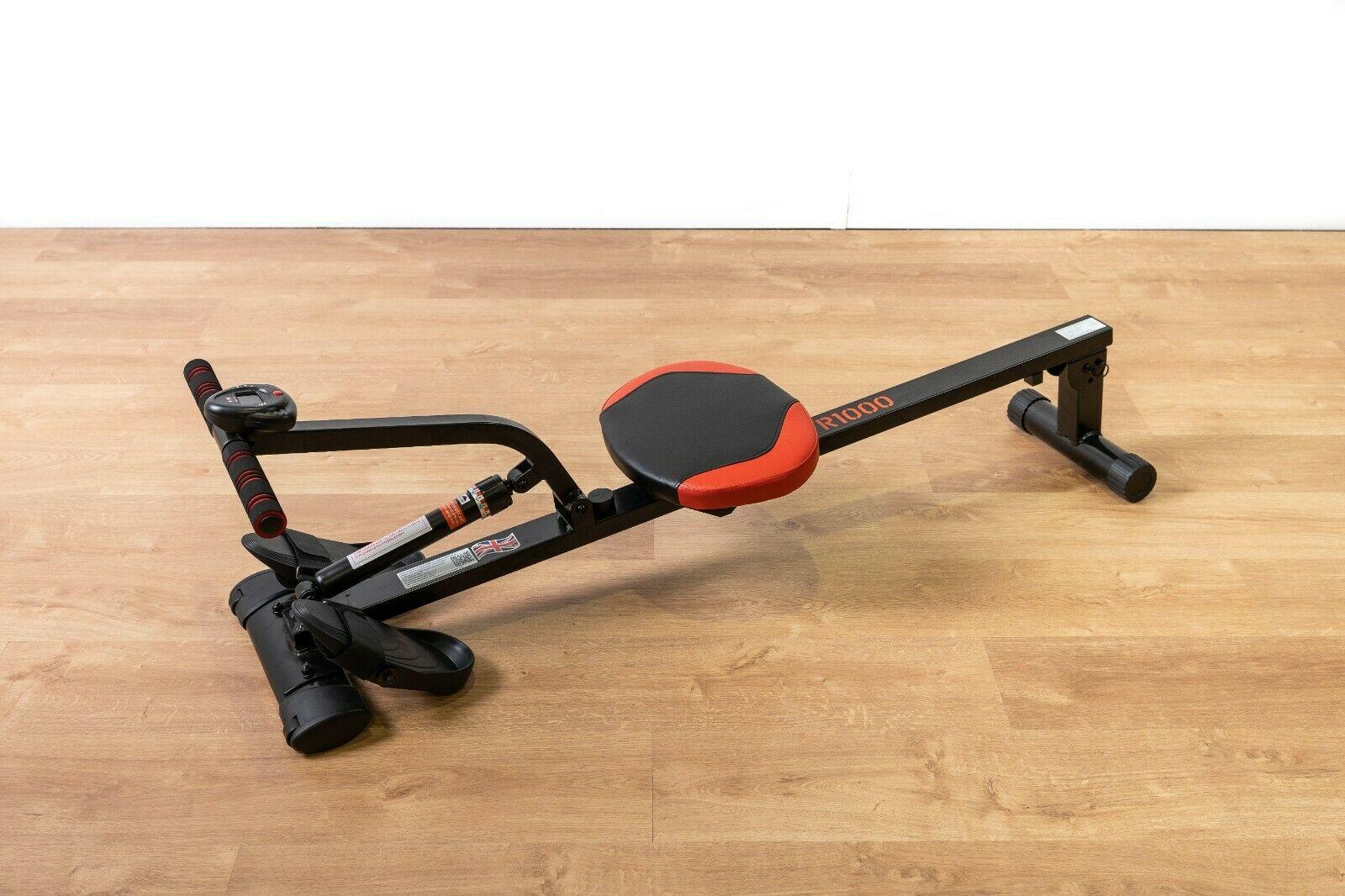
Hydraulic rowers use a cylinder or piston to create resistance. They tend to be compact, affordable and well suited to home environments where space matters. The Body Sculpture BR1000 Hydraulic Rower features 12 levels of adjustable resistance and an adjustable incline, so you can increase the challenge as your fitness improves. It comes with a 12-month warranty and a dedicated UK helpline, making it a reassuring first machine for beginners.
Magnetic Rowing Machines
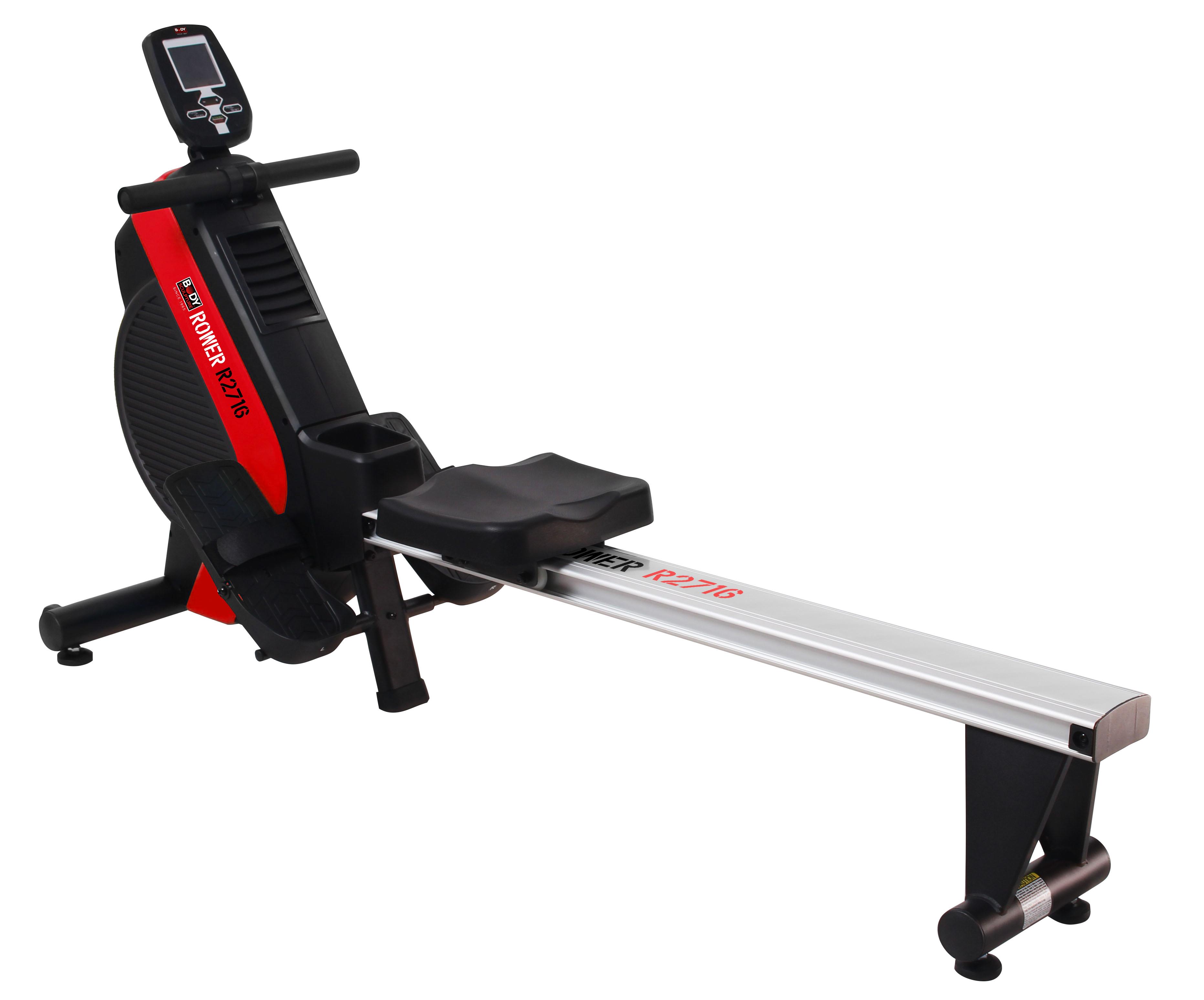
Magnetic rowers use magnets to generate resistance, which produces a smooth, quiet action that's particularly well suited to rowing at home. The resistance level is set manually and stays consistent throughout the stroke, giving a controlled, even feel that beginners tend to find easier to manage. The Body Sculpture Magnetic Resistance Foldable Rower combines this with a foldable design and transport wheels, making it simple to store away when not in use.
Air and Combined Resistance Rowing Machines
Air rowers generate resistance through a fan, which means the harder you pull, the more resistance you feel. Combined fan and magnetic systems offer the best of both, giving the dynamic feel of air resistance alongside the adjustable control of magnetic. The Body Sculpture Programmable Fan/Magnetic Rower combines both systems with 12 training programmes, making it a versatile option for anyone looking to progress beyond the basics.
What Muscles Does a Rowing Machine Work?
This is where rowing really stands out. A single rowing stroke engages over 80% of the body's muscles, which is significantly more than most other cardio machines. A treadmill primarily works the lower body. An exercise bike is largely legs. Rowing brings in the whole body every time.
Did You Know?
A single rowing stroke engages over 80% of the body's muscles, making it one of the most complete cardio workouts available. The legs power the drive, the core stabilises throughout, and the back, shoulders and arms complete every stroke.
The legs do the heaviest lifting, with the quads, hamstrings and glutes powering the initial drive. The core works constantly throughout the stroke to stabilise and transfer power. The back, particularly the lats and rhomboids, engages strongly through the pull phase, while the shoulders, biceps and forearms complete the movement as the handle comes in. The result is a workout that builds cardiovascular fitness and muscular endurance at the same time, which is why rowing is considered one of the most time-efficient forms of exercise available. Our post on the 7 benefits of using a rowing machine covers this in depth.
Is a Rowing Machine Good for Beginners?
The short answer is yes and in several ways it's better suited to beginners than many other cardio machines. The most important reason is that rowing is low impact. Unlike running, which puts repeated stress through the knees, hips and ankles with every stride, rowing keeps your feet flat on the footplates throughout. The movement is smooth and controlled, which makes it much gentler on the joints while still delivering a challenging home workout.
Body Sculpture
"Rowing slowly and correctly is far more effective and safer than rowing fast with poor technique."
Adjustable resistance is another big advantage for beginners. Starting at a low resistance level means you can focus on learning the stroke without fatigue getting in the way and you can increase the challenge gradually as your fitness and confidence improve. The key thing for beginners is to prioritise form over pace.
How Long Should a Beginner Use a Rowing Machine?
Less is more in the early stages. Starting with 10 to 15 minutes at a comfortable pace gives your body time to adapt to the movement without overwhelming it. Once that feels manageable, building up to 20 minutes allows you to complete a comprehensive full body home workout in a single session, covering both cardio and muscular endurance in one go.
The NHS recommends at least 150 minutes of moderate intensity exercise per week for adults and rowing is an efficient way to work towards that. Three or four 20-minute sessions spread across the week is a very achievable starting point that delivers real results over time.
Common Rowing Machine Mistakes Beginners Should Avoid
Getting the most out of a rowing machine as a beginner means understanding a few common pitfalls that are easy to fall into, especially when you're learning the movement from scratch.
| Mistake | Why It Happens | How to Fix It |
|---|---|---|
| Pulling with arms first | Feels natural but bypasses the most powerful muscles | Drive with legs first. Arms only come in after the legs are almost straight |
| Rounding the back | Fatigue causes posture to collapse forward | Keep the back strong and upright throughout. Slow down rather than losing form |
| Rowing too fast | Assuming speed equals a better workout | Focus on full extension and correct sequence. Build rhythm before speed |
Why a Rowing Machine Is One of the Best Home Workout Machines
One of the things that makes rowing machines such a practical choice for home workouts is how well they suit domestic spaces. Most home-use models fold away when not in use, which makes them far less intrusive than a treadmill or cross trainer. Magnetic resistance machines run quietly, which is more important at home than it might seem. In a gym, background noise masks the sound of equipment. At home, a loud machine can disturb the rest of the household, particularly early in the morning or late at night.
The other practical advantage is what you get from a single machine. A rowing machine delivers cardio, strength and full body workout benefits without needing additional equipment. For anyone building a home gym setup, it covers a lot of ground efficiently. The Body Sculpture BR3010 Rower and Gym takes this further, combining a rowing machine with resistance band gym functionality in one compact unit, which is a particularly good option for anyone who wants strength training alongside their cardio without taking up additional space. If you're still deciding what else belongs in your first setup, our guide to 5 home gym essentials for beginners puts a rower in context alongside the other basics.
Which Body Sculpture Rowing Machine Is Best for Beginners?
Body Sculpture offers a range of rowing machines designed for home use, covering different resistance types, budgets and space requirements.
| Model | Best For | Key Features |
|---|---|---|
| BR1000 Hydraulic Rower | Getting started at home | 12 resistance levels, adjustable incline, built-in computer, 12-month warranty |
| Magnetic Foldable Rower | Quiet home workouts and easy storage | Smooth magnetic resistance, foldable design, transport wheels |
| 4-in-1 Rower | Full body home workouts | Rowing, ab crunches, tricep dips and push-ups in one compact machine |
| Fan/Magnetic Programmable Rower | Progressing beyond the basics | Combined air and magnetic resistance, 12 training programmes |
| BR3010 Rower and Gym | Cardio and strength training in one unit | Rowing combined with resistance band gym functionality |
Rowing machines are one of the most complete pieces of fitness equipment available for home workouts, engaging over 80% of the body's muscles in every stroke while remaining low impact on the joints. They're well suited to beginners thanks to adjustable resistance, a straightforward movement pattern and the ability to build gradually from short, manageable sessions into a full home workout routine. Understanding how the stroke works and avoiding the most common form mistakes from the start makes the learning curve much shorter than most people expect. If you want to see exactly how rowing's calorie burn compares to treadmills, ellipticals and kettlebells, our guide on which type of home fitness equipment burns the most calories has the full comparison.
Key Takeaways
- A rowing stroke has four phases: the catch, the drive, full extension and the recovery
- Rowing engages over 80% of the body's muscles, making it one of the most complete cardio machines available
- It is low impact on the joints, making it ideal for beginners and those returning from injury
- Beginners should start with 10 to 15 minutes at low resistance and prioritise form over speed
- Most home rowing machines fold away, making them practical for domestic spaces
Frequently Asked Questions
Is a rowing machine good for weight loss?
Yes. Rowing is a high-calorie-burning exercise that combines cardiovascular effort with full body muscular engagement. Regular sessions alongside a balanced diet are an effective approach to weight loss. The combination of cardio and strength stimulus in a single session also helps maintain and build lean muscle, which supports a healthy metabolism over time.
Can I use a rowing machine every day?
You can, but it depends on the intensity. Light to moderate rowing every day is fine for most people. Higher intensity sessions are best done three to four times per week with rest or lighter sessions in between to allow recovery. Listening to your body and varying intensity across the week is the most sustainable approach.
How much space does a rowing machine take up at home?
Most home rowing machines require around 2 to 2.4 metres of floor length when in use. Many models fold vertically when stored, reducing their footprint significantly. Always check the folded and unfolded dimensions against your available space before buying.
Is rowing better than running for cardio?
Both are effective but rowing has some practical advantages. It's low impact, which makes it accessible to more people and reduces the risk of joint-related issues over time. It also works the upper body and core alongside the legs, making it a more complete workout per session than running alone. For people who find running uncomfortable on their joints, rowing is often the better long-term option.
What is a good stroke rate for a beginner on a rowing machine?
A stroke rate of around 20 to 24 strokes per minute is a good starting point for beginners. This is slow enough to focus on form and maintain control throughout each stroke. As technique improves and fitness builds, you can increase the rate or resistance to make sessions more challenging.
Found this helpful? Share it with someone who has been thinking about adding a rowing machine to their home setup.
Find Your Perfect Rowing Machine
Browse the full Body Sculpture rowing machine range, designed for real results in real homes. With over 50 years of expertise, we are here to help you find the right fit for your goals, your space and your budget.
Shop Rowing Machines50+ Years Expertise Designing equipment since 1975 | ★★★★★ Trustpilot Rated Excellent by our customers | FREE UK Delivery On all qualifying orders | 24/7 Expert Advice Our team is happy to help |