If you've been searching for a fun, effective and joint-friendly way to get fit at home, a rebounder trampoline might be exactly what you've been looking for. These compact fitness tools have surged in popularity in recent years as more people discover just how much they offer beyond the novelty of bouncing. Whether your goal is weight loss, improved cardiovascular fitness, better balance or a low-impact alternative to running, rebounding delivers the goods in a surprisingly small footprint.
In this guide we'll cover everything you need to know about rebounder trampolines, from what they are and how they work to the best exercises to try and how to choose the right one for your needs.
In This Article
What Is a Rebounder Trampoline?
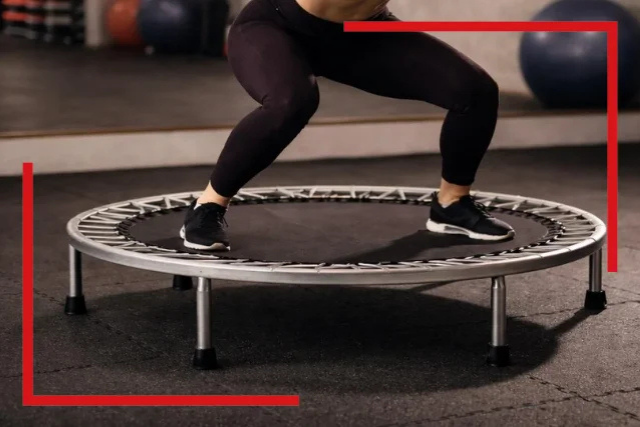
A rebounder trampoline is a small, low-set trampoline designed specifically for fitness use rather than recreational jumping. Unlike large garden trampolines, rebounders are compact enough to use indoors, typically measuring around 36 to 40 inches in diameter, and are built to withstand the repetitive, controlled movements of a structured workout.
They feature a sprung or bungee-cord jumping surface that absorbs impact and provides a controlled bounce, making them much gentler on the joints than hard surfaces. Most models sit low to the ground and are either fixed or foldable, with some including a stability bar for added confidence during use. Body Sculpture's 40-inch rebounder is a popular choice for home use, offering a balance of stability, bounce quality and compact storage.
How Does Rebounding Work as Exercise?
Rebounding works by using the gentle bounce of the trampoline surface to create a low-impact cardiovascular workout. When you bounce, your body experiences a rapid shift between gravitational force and weightlessness with each rep. This constant change in gravitational load engages the muscles throughout your legs, core and stabilisers in ways that feel effortless but add up to real effort over the course of a session.
Did You Know?
NASA research found that rebounding is 68% more efficient than jogging in terms of oxygen consumption and physiological effort required. The study, originally conducted to assess rehabilitation for astronauts returning from space, found that the biomechanics of bouncing produce significantly more benefit per unit of effort than running on a hard surface.
The trampoline surface absorbs up to 80% of the shock that would otherwise travel through your ankles, knees and hips with each landing. This makes rebounding one of the most joint-friendly cardiovascular exercises available, suitable for people of all ages and fitness levels including those managing joint conditions or returning from injury.
The Key Benefits of Rebounder Trampolines
Rebounders offer a wider range of benefits than most people expect from what looks like a simple piece of equipment. The combination of cardiovascular challenge, low joint impact and full-body engagement makes them genuinely versatile.
Cardiovascular Fitness and Calorie Burn
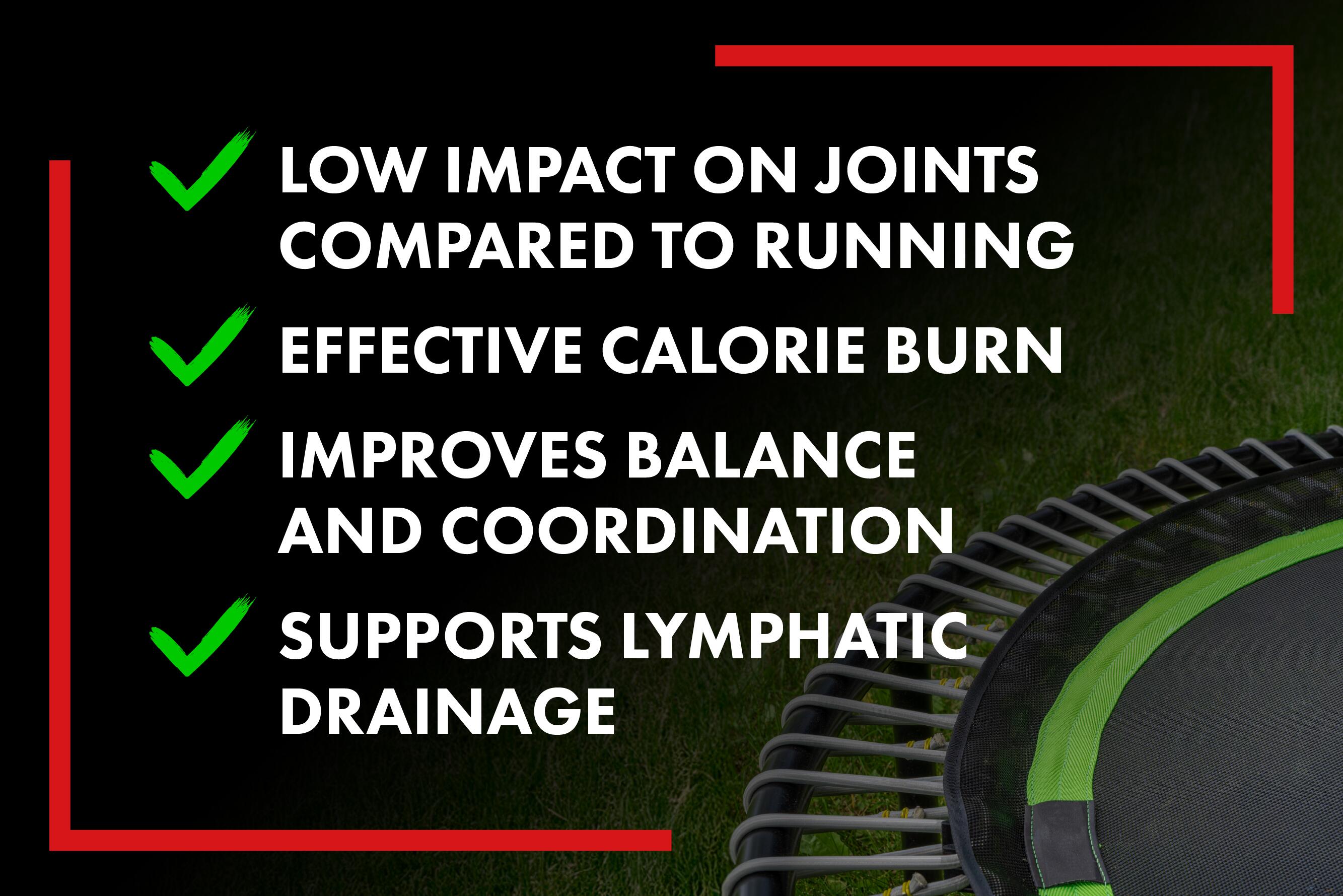
Regular rebounding sessions raise and sustain your heart rate, improving cardiovascular fitness over time in the same way that running or cycling does. A moderate 30-minute session burns between 150 and 300 calories depending on intensity and body weight. Higher-intensity intervals push that figure significantly higher. For a more detailed look at how this stacks up against other home cardio equipment, our guide on which cardio equipment burns the most calories is worth reading alongside this one.
Low Impact on Joints
The bouncing surface absorbs the majority of impact with each landing, removing the repetitive shock that accumulates through the joints during running. This makes rebounding an excellent option for older adults, people returning from lower-body injuries and anyone who finds higher-impact exercise uncomfortable to sustain regularly.
Improved Balance and Coordination
The constantly shifting surface of a rebounder requires your body to continually adjust its balance, engaging the stabilising muscles in the feet, ankles, core and hips. Regular rebounding noticeably improves proprioception, which is the body's awareness of its own position in space, which has direct benefits for injury prevention and general physical confidence.
Lymphatic System Support
Body Sculpture
"Rebounding is one of the few exercises that simultaneously improves cardiovascular fitness, joint health, balance, coordination and lymphatic circulation."
Unlike the cardiovascular system, the lymphatic system has no pump of its own and relies on muscular movement to circulate lymph fluid around the body. The up-and-down motion of rebounding is particularly effective at stimulating lymph flow, which supports the body's immune function and waste removal processes. This is one of the less obvious but frequently cited benefits of regular rebounding for overall health and wellbeing.
Fun and Sustainable
One of the most underrated benefits of a rebounder is how enjoyable it is to use. Bouncing feels inherently playful and that positive association with movement makes it far easier to build a consistent habit than equipment that feels like hard work from the first session. The single most important factor in long-term fitness results is consistency and anything that makes showing up easier is genuinely valuable.
The Best Rebounder Exercises to Try at Home
Rebounders are more versatile than most people assume. Beyond simple bouncing, a wide range of structured exercises can be performed on the surface to target different aspects of fitness.
| Exercise | Focus | How to Do It | Duration |
|---|---|---|---|
| Basic Bounce | Cardio warm-up, balance | Stand with feet hip-width apart and gently bounce, keeping feet close to the surface. Focus on steady breathing and posture. | 2 to 3 minutes |
| High Knees | Cardio intensity, hip flexors | Bounce while alternating lifting your knees toward chest height with each step. Pump arms in time with the movement. | 30 to 60 seconds |
| Jumping Jacks | Full body cardio, coordination | Perform standard jumping jacks on the rebounder surface. The bounce reduces the impact compared to floor-based jacks. | 45 seconds |
| Squat Bounce | Glutes, quads, stability | Stand in a squat position on the rebounder and perform small, controlled bounces from this position. Keep the core engaged throughout. | 30 to 45 seconds |
| Twist Bounce | Core, obliques, coordination | Bounce gently and rotate your hips and lower body left and right with each bounce while keeping your upper body relatively still. | 30 to 60 seconds |
▶ Pro Tip
Build a simple interval circuit on your rebounder by alternating 40 seconds of higher-intensity work, such as high knees or jumping jacks, with 20 seconds of basic bounce recovery. Repeat for 15 to 20 minutes for an effective, low-impact cardio session that fits easily into a short workout window.
Rebounding vs Running: How Do They Compare?
Both rebounding and running are effective cardiovascular exercises but they serve different people and different goals particularly well. Here's a direct comparison across the factors that matter most for home training decisions:
| Factor | Rebounding | Running |
|---|---|---|
| Joint Impact | Very low. Surface absorbs up to 80% of impact | Medium to high. Cumulative load on knees, hips and ankles |
| Calorie Burn | 150 to 300 per 30 minutes at moderate intensity | 250 to 450 per 30 minutes at moderate pace |
| Space Required | Minimal. Works indoors in a small clear area | Outdoor space or a treadmill |
| Balance and Coordination | High. Constantly activates stabilising muscles | Moderate. Primarily a linear movement pattern |
| Suitability for Beginners | Excellent. Low impact and naturally enjoyable | Moderate. Requires building base fitness first |
| Weather Dependent | No. Fully indoor use | Yes, unless using a treadmill |
How to Choose the Right Rebounder Trampoline
Not all rebounders are the same and a few key features make a real difference to the experience and longevity of the machine. When comparing options, the main things to look at are the size and weight capacity of the surface, the type of spring or bungee system used, whether the legs fold for storage, the noise level during use and whether a stability handlebar is included.
Spring-based rebounders tend to be more durable and provide a firmer, more responsive bounce that suits higher-intensity workouts. Bungee-cord models are typically quieter and slightly gentler on the joints, making them a good choice for lower-intensity sessions or shared living spaces. A stability bar is worth considering if you're new to rebounding, recovering from an injury or training in a space with limited room to catch yourself.
Body Sculpture's rebounder range covers multiple sizes and specifications designed for home use. If you're looking to pair your rebounder with other home cardio equipment, our guide on which cardio equipment burns the most calories helps you understand how everything fits together. For an even more detailed breakdown that also covers kettlebells and ellipticals, our newer guide on which type of home fitness equipment burns the most calories is worth a look too.
Key Takeaways
- Rebounders are compact, indoor fitness trampolines designed for structured cardio and low-impact exercise
- The surface absorbs up to 80% of impact, making rebounding one of the most joint-friendly cardio options available
- NASA research found rebounding to be 68% more efficient than jogging in terms of physiological benefit per unit of effort
- Regular rebounding improves cardiovascular fitness, balance, coordination and lymphatic circulation
- A basic interval circuit of 15 to 20 minutes produces a genuinely effective cardio session in a minimal space
Frequently Asked Questions
Is a rebounder good for weight loss?
Yes. Regular rebounding sessions burn a meaningful number of calories, raise your resting metabolic rate over time and contribute to the kind of consistent movement that supports long-term weight management. Combined with a balanced diet, a 20 to 30 minute session three to five times per week delivers noticeable results. Our guide on how many calories are burned during different activities gives a useful comparison.
Is rebounding safe for people with bad knees?
Rebounding is one of the most knee-friendly forms of cardio available because the surface absorbs the majority of impact with each landing. Many people who find running or even brisk walking uncomfortable due to knee pain can rebound comfortably. That said, anyone with a specific knee condition or recent injury should consult a healthcare professional before starting.
How long should I rebound for as a beginner?
Start with 10 to 15 minutes at a low intensity and build from there as your confidence and fitness improve. The body needs time to adapt to the unusual movement pattern of rebounding, particularly the stabilising muscles in the feet and ankles. Short, gentle sessions in the first week or two prevent the soreness that can put people off continuing.
Can I use a rebounder every day?
Yes, particularly at lower intensities. Because rebounding is low impact, daily use is generally well tolerated by most people. Higher-intensity interval sessions are better done three to five times per week with rest days in between to allow recovery. Light bouncing daily can also serve as an active recovery option on rest days from other training.
What's the difference between a rebounder and a garden trampoline?
Rebounders are specifically designed for fitness use. They're smaller, lower to the ground, built for controlled, structured movements and designed to be used indoors on a daily basis. Garden trampolines are larger, designed for recreational jumping and not built for the repetitive, targeted exercises of a fitness programme. Using a garden trampoline as a rebounder substitute is not recommended as the bounce characteristics and structural specifications are completely different.
Found this helpful? Share it with someone who wants a fun, joint-friendly way to get fit at home without a big machine taking over the room.
Try a Rebounder at Home
Browse the Body Sculpture rebounder trampoline range, including foldable models designed for home use. With over 50 years of expertise, we are here to help you find the right fit for your space and fitness goals.
Shop Rebounders50+ Years Expertise Designing equipment since 1975 | ★★★★★ Trustpilot Rated Excellent by our customers | FREE UK Delivery On all qualifying orders | 24/7 Expert Advice Our team is happy to help |