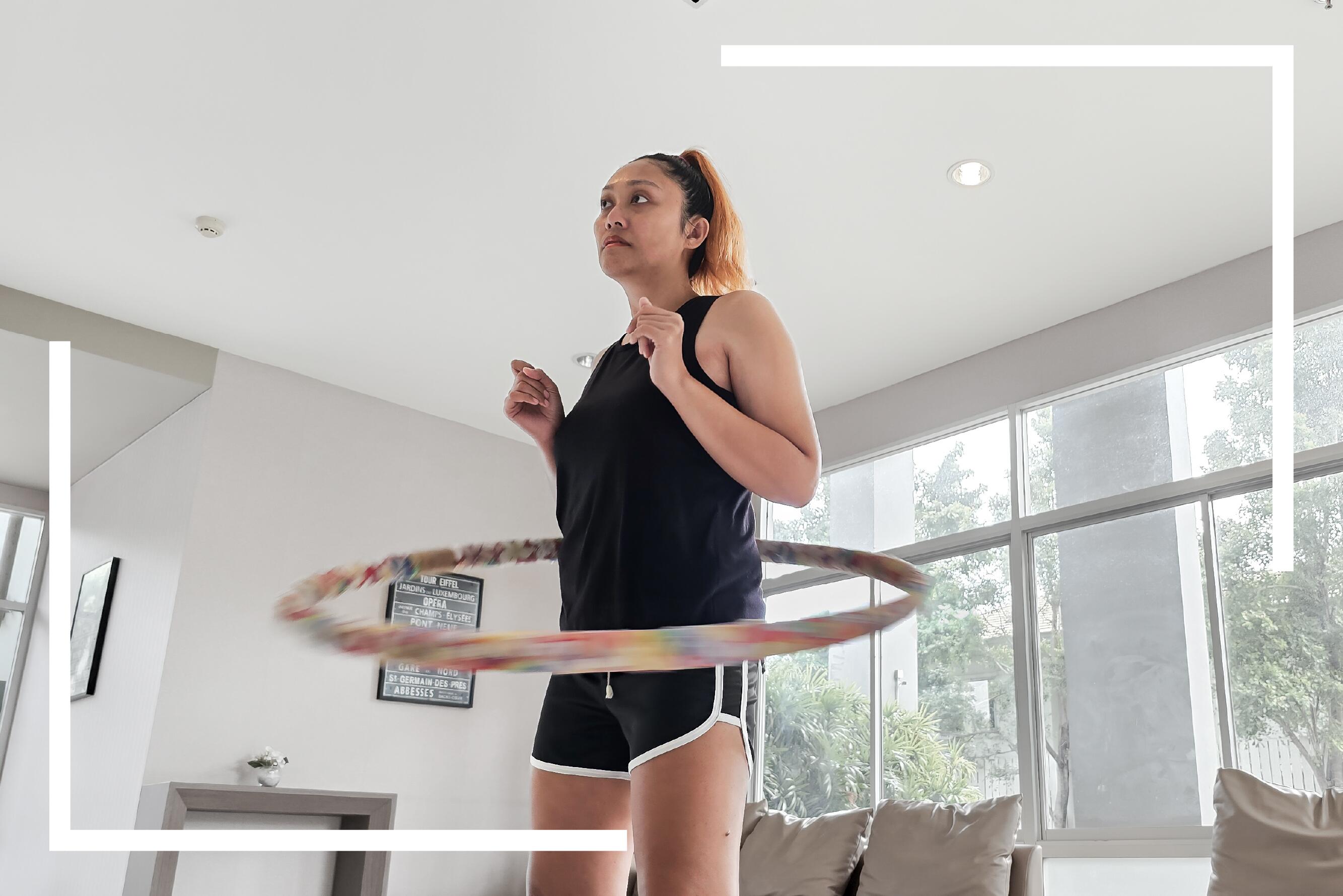
It's one of those exercises that looks deceptively casual. A few minutes spinning a hoop around your waist doesn't feel like it should count as a proper workout, which is part of why so many people underestimate it. The reality is that hula hoop exercise is a genuine cardio workout that engages your core continuously, elevates your heart rate and burns a meaningful number of calories in a relatively short amount of time. The research backs it up and the numbers are more compelling than most people expect.
In This Article
What Does the Research Say About Calories Burned Hula Hooping?
The most well-known study on hula hooping calories was run by the American Council on Exercise at the University of Wisconsin. They found that a 30-minute weighted hula hoop workout burned an average of 210 calories, around 7 calories per minute. To put that in perspective, it's in the same range as boot camp classes, cardio kickboxing and step aerobics.
Did You Know?
A study by the American Council on Exercise found that a 30-minute weighted hula hoop session burns an average of 210 calories, putting it in the same category as boot camp classes, cardio kickboxing and step aerobics.
The Mayo Clinic puts the number at roughly 165 calories per 30 minutes for women and around 200 for men, depending on body weight and how hard you're working. Either way, the calories burned hula hooping are on a par with activities that need a lot more equipment and a lot more room.
Does a Weighted Hula Hoop Burn More Calories Than a Standard One?
A standard plastic hoop weighs around 0.5 to 1lb. A weighted hula hoop is usually somewhere between 1.5 and 3lbs. That extra weight means your body has to work harder to keep it moving, which pushes your heart rate up and increases the number of calories burned hula hooping in the same amount of time.
Your core muscles, particularly the sides of your waist, lower stomach and lower back, have to put in more effort to keep a heavier hoop going. That's what makes the weighted hula hoop workout better for toning and building core strength compared to a lighter hoop. The Body Sculpture Weighted Hula Hoop is built for home use and works for all fitness levels, whether you're just starting out or adding it to something you already do.
What Factors Affect How Many Calories You Burn While Hula Hooping?
The average figures are a helpful guide, but how many calories burned hula hooping you personally get from a session comes down to a few things.
Body Weight
Everyone burns a slightly different number of calories doing the same workout and body weight is a big part of why. The 210-calorie figure is an average across a range of participants, so your personal number will vary from that depending on a few individual factors.
Workout Intensity and Duration
Effort and duration both make a real difference to how many calories you burn. A steady 30-minute session at a consistent pace will burn significantly more than a session where you keep stopping and starting. The same applies to time, as 10 minutes simply won't deliver the same results as 30, so it's worth building your sessions up as you improve.
Hoop Weight
A heavier hoop makes your body work harder, which means more calories burned. That said, picking the right weight for where you're at matters. If the hoop is too heavy to keep going consistently, you lose the cardio benefit. Too light and you won't get the resistance you need to make the most of your hula hoop workout.
▶ Pro Tip
Aim for a hoop weight that lets you keep it spinning consistently for several minutes at a time. If you keep dropping it after a few rotations, it's too heavy. If it feels effortless, it's too light to deliver real core resistance.
What Does Hula Hooping Do for Your Core and Body Composition?
The calorie burn is only part of the story. What makes weighted hula hoop exercise particularly useful is the effect it has on your core and how your body looks and feels over time. To keep a weighted hula hoop spinning, your whole core has to stay switched on the entire time. That includes the sides of your waist, your stomach muscles, your lower back and your hips. It's not targeting one small area, it's working all of them at once for the full duration of the session. Do that consistently and you'll build real muscle and definition across your core.
Body Sculpture
"Calories burnt while hula hooping are higher than most people expect, and the research is clear about it."
More muscle also means your body burns more calories when you're not exercising. Building up your core through regular hula hoop core workouts gradually increases how many calories your body uses throughout the day, not just during sessions. For anyone who wants to add more core-focused work alongside their hooping, the abs and core equipment range has plenty of options that pair well with it.
How Does Hula Hooping Compare to Other Forms of Cardio?
At 210 calories per 30 minutes, weighted hula hoop exercise holds its own against some of the more well-known cardio workouts out there. The ACE study put it in the same category as boot camp, step aerobics and cardio kickboxing, none of which you can do in your living room with one piece of equipment and no particular skill set.
| Activity | Calories Per 30 Minutes | Space and Equipment Needed |
|---|---|---|
| Weighted Hula Hoop | Around 210 | Minimal. One hoop, small clear area |
| Boot Camp Class | Around 200 to 250 | Significant. Multiple pieces of equipment and space |
| Cardio Kickboxing | Around 200 to 250 | Moderate. Open space, sometimes a bag |
| Brisk Walking | Around 150 to 200 | None. Outdoor space or treadmill |
| Light Cycling | Around 150 to 200 | Moderate. Bike and some floor space |
Figures are approximate ranges based on moderate intensity effort. Actual calorie burn varies with body weight and effort.
Brisk walking burns roughly 150 to 200 calories in 30 minutes depending on your pace and weight. Light cycling is in a similar range. A hula hoop workout at a decent pace matches or beats both of those, which makes it one of the better value home cardio options going. If you want to see how it stacks up against other home equipment, which cardio equipment burns the most calories and which type of home fitness equipment burns the most calories are both worth a look.
How Long Do You Need to Hula Hoop to Start Seeing Results?
A 2019 clinical study found measurable changes in waist size and body fat from an average of just 12.8 minutes of hula hoop exercise a day, with better results than a group hitting close to 10,000 steps daily. You don't need to carve out a big chunk of your day to make progress.
If you're new to it, two or three sessions of 10 to 15 minutes a week is a good place to start and build from. Sticking to it regularly matters more than going longer in any single session and because weighted hula hoop exercise is low impact, you won't be stiff and sore the next day. For anyone who finds it hard to fit workouts in around a busy day, our blog on how to fit mini workouts into your day has some practical ideas that work well with a hula hoop core workout in the mix.
How to Get More Out of Your Weighted Hula Hoop Workout
The technique makes a bigger difference than most people realise. The mistake a lot of beginners make is moving their hips in a circle, when what actually keeps the hoop going is a front-to-back shift of your weight. Get that right and you'll be able to keep it spinning for longer and work at a higher pace, which means more calories and better results.
Once you've got the basics down, mixing things up keeps the workout challenging and stops it feeling like the same thing every time. Moving your arms, adding a small squat, or stepping side to side while you hoop all bring more muscles into it without needing anything else. Combining hula hoop exercises with a bit of strength training or other cardio makes for a more rounded routine overall. It's worth having a read of 10 common home workout mistakes and how to avoid them before you get going, as a few simple things can make a real difference to how effective your sessions are.
Calories burnt while hula hooping are higher than most people expect and the research is clear that a 30-minute weighted hula hoop workout burns as much as a boot camp class or cardio kickboxing session. On top of that, the constant core work builds real strength and adds muscle over time, which means your body gets more efficient at burning calories even when you're not exercising. Given that you can see measurable results from as little as 12 to 15 minutes a day, it's one of the most time-efficient ways to use hula hoop for weight loss and toning at home.
Key Takeaways
- A 30-minute weighted hula hoop session burns around 210 calories on average
- This puts it on par with boot camp classes, cardio kickboxing and step aerobics
- Weighted hoops burn more calories and build more core strength than standard hoops
- Measurable results in waist size and body fat have been shown from just 12.8 minutes a day
- Technique matters more than effort. A front-to-back weight shift keeps the hoop going longer
Frequently Asked Questions
Is hula hooping good for losing belly fat?
Hula hooping engages the core continuously and burns a meaningful number of calories, which supports overall fat loss when combined with a balanced diet. Spot reduction of fat in one specific area isn't possible through exercise alone, but the consistent core engagement does build muscle and definition in that area over time.
How many calories does 15 minutes of hula hooping burn?
Based on the research figures of around 210 calories per 30 minutes, a 15-minute session burns approximately 100 to 105 calories on average. This will vary depending on body weight, hoop weight and how hard you're working during the session.
Is a weighted hula hoop safe to use every day?
Yes, for most people. Hula hooping is low impact and gentle on the joints, which makes it suitable for daily use. As with any new exercise, starting with shorter sessions and building up gradually helps your core adjust, particularly if you experience any mild soreness in the first week or two.
What weight hula hoop should a beginner use?
Beginners generally do well starting with a hoop in the lighter to middle of the weighted range, around 1.5 to 2lbs. This provides enough resistance to feel the core engagement without being too heavy to keep spinning consistently while you're still learning the technique.
Can hula hooping replace other forms of cardio?
For general fitness, fat loss and core strength, hula hooping can absolutely serve as a primary cardio activity. It compares favourably to walking, cycling and several class-based workouts in terms of calorie burn. For very specific goals like marathon training, it would work better as a complement to other training rather than a complete replacement.
Found this helpful? Share it with someone who has been wondering if hula hooping is actually worth their time.
Try a Weighted Hula Hoop Workout
The Body Sculpture Weighted Hula Hoop is made for home use and suits all fitness levels. Browse the full toning equipment range to see what else can support your training at home.
Shop Toning Equipment50+ Years Expertise Designing equipment since 1975 | ★★★★★ Trustpilot Rated Excellent by our customers | FREE UK Delivery On all qualifying orders | 24/7 Expert Advice Our team is happy to help |