Whether you're recovering from a sports injury, managing a long-term condition or simply returning to exercise after a break, resistance bands can be one of the safest and most effective tools to support your rehabilitation. Gentle, controlled and adaptable, they allow you to rebuild strength and mobility at your own pace without placing unnecessary stress on vulnerable joints and muscles.
In this guide we'll explore how resistance bands can support your recovery, share the best exercises for different areas of the body and offer practical tips to help you progress safely and confidently at home.
In This Article
Why Resistance Bands Are Ideal for Injury Recovery
Resistance bands offer a unique combination of qualities that make them particularly well suited to rehabilitation and recovery training. Unlike free weights, which apply a constant downward force of gravity, bands provide variable resistance throughout the movement, meaning the load increases as you stretch the band further. This allows the muscles to work through their full range of motion without being overpowered at their weakest point.
Did You Know?
Resistance bands have been used in physiotherapy and clinical rehabilitation settings for decades. Their ability to provide low-impact, controllable resistance makes them one of the most widely recommended tools for rebuilding strength after injury, across all ages and fitness levels.
Bands also give you far more control over the intensity of each exercise. You can start with a very light resistance and increase gradually as your strength returns, which is exactly what the body needs during recovery. They're gentle on the joints, quiet, compact and require no specialist equipment or setup, making them one of the most practical recovery tools available for home use. Our guide on can you build muscle with just resistance bands explains more about how much they're capable of across all fitness levels, not just recovery.
What to Check Before Starting Your Recovery Exercises
Before beginning any rehabilitation programme at home, there are a few important points to consider. Always consult your GP, physiotherapist or healthcare professional before starting resistance band exercises following an injury. They can advise on what's appropriate for your specific condition, how soon to start and what to avoid.
Body Sculpture
"Recovery training isn't about pushing through. It's about moving with intention, listening to your body and rebuilding strength one small step at a time."
When you begin, always start with the lightest resistance available and focus entirely on moving with control and correct alignment. Stop immediately if you feel sharp, sudden or worsening pain and rest before trying again. Recovery training is about patience and consistency, not pushing through discomfort. Wearing a joint support or brace for the affected area during sessions adds an extra layer of stability as you rebuild confidence and strength.
Resistance Band Exercises for Shoulder Recovery
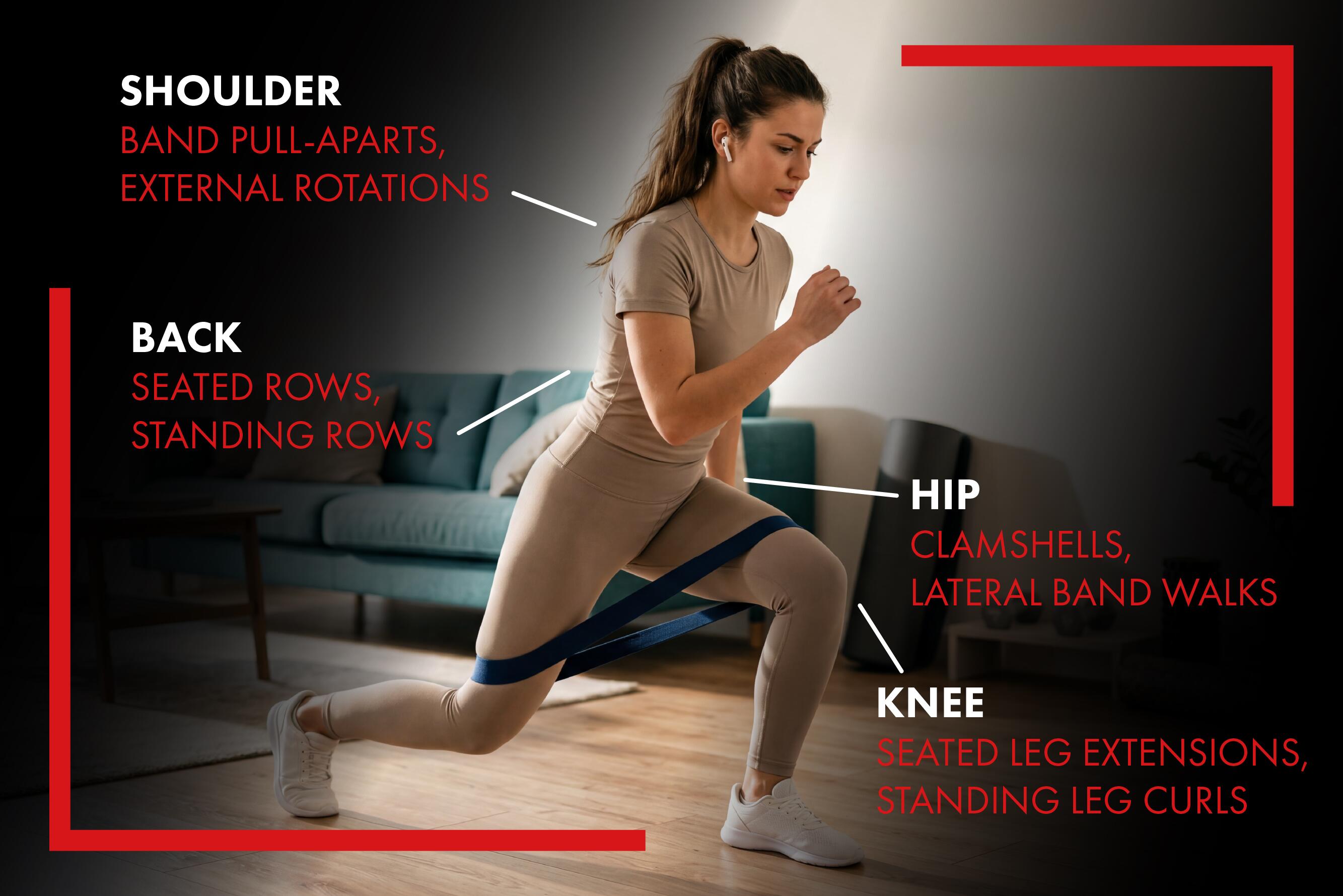
Shoulder injuries are among the most common, affecting everything from rotator cuff issues to general joint inflammation. Resistance bands are ideal for rebuilding shoulder strength because they allow precise, controlled movements that don't overload the joint.
| Exercise | How to Do It | Reps |
|---|---|---|
| External Rotation | Anchor the band at waist height. Hold with the affected arm, elbow at 90 degrees. Rotate your forearm outwards slowly and return with control. | 10 to 15 reps |
| Band Pull-Apart | Hold the band in both hands in front of you at shoulder height, arms straight. Pull the band apart until arms are extended to each side. Control the return. | 12 to 15 reps |
| Shoulder Press | Stand on the band. Hold handles or ends at shoulder height. Press slowly overhead, keeping core engaged. Lower with control. | 10 to 12 reps |
Resistance Band Exercises for Knee Recovery
Knee injuries often result in weakness in the surrounding muscles, particularly the quadriceps and glutes, which are essential for joint stability. Strengthening these muscles with light resistance helps restore function and reduce strain on the knee joint itself.
| Exercise | How to Do It | Reps |
|---|---|---|
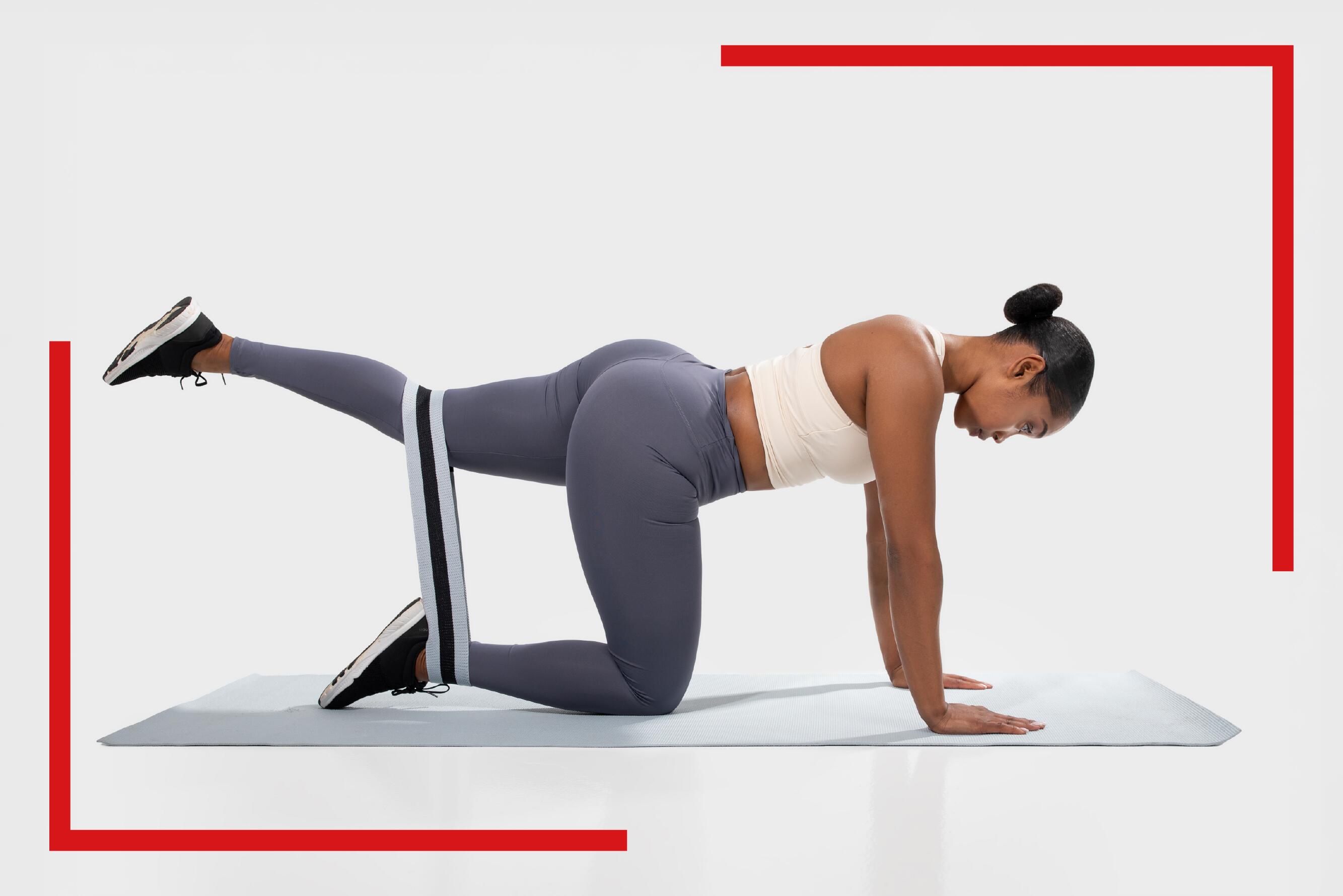
| Clamshell | Lie on your side with a loop band just above the knees. Feet together, knees bent. Rotate the top knee upward, keeping feet stacked. Lower slowly. | 12 to 15 each side |
| Seated Leg Press | Sit in a chair, loop the band around one foot and anchor it to a stable point. Slowly straighten the leg against the resistance of the band and return. | 10 to 15 each leg |
| Lateral Band Walk | Loop band just above knees. Stand with feet hip-width apart in a slight squat position. Step sideways slowly, keeping tension in the band throughout. | 10 to 12 steps each direction |
Resistance Band Exercises for Lower Back Recovery
Lower back pain is one of the most common complaints among adults and recovery requires careful, targeted exercise. Resistance bands can strengthen the surrounding muscles, including the core and glutes, which take pressure off the spine and support long-term back health.
▶ Pro Tip
For lower back recovery, always prioritise movement quality over resistance. Every rep should feel controlled and pain-free. If an exercise causes any discomfort in the spine, stop immediately and consult your healthcare professional before continuing.
| Exercise | How to Do It | Reps |
|---|---|---|
| Banded Glute Bridge | Lie on your back, knees bent, band across hips. Press through heels to raise hips into a straight line. Squeeze glutes at the top and lower slowly. | 12 to 15 reps |
| Seated Row | Sit on the floor, legs extended. Loop band around feet. Hold both ends and pull back toward your hips, squeezing shoulder blades. Return slowly. | 10 to 12 reps |
| Cat-Cow with Band | On hands and knees, loop band around your upper back. Gently arch and round your spine in a slow, controlled rhythm. The band adds gentle feedback. | 10 slow reps |
Resistance Band Exercises for Hip and Glute Recovery
Hip injuries and weakness in the glutes can affect everything from walking to posture and lower back health. These exercises target the hip abductors, external rotators and glute muscles, which are commonly weakened after injury or extended periods of inactivity.
| Exercise | How to Do It | Reps |
|---|---|---|
| Standing Hip Abduction | Loop band just above knees. Stand tall holding onto a wall for balance. Slowly raise one leg out to the side against the band resistance. Lower with control. | 12 to 15 each side |
| Donkey Kick | On hands and knees, loop band around thighs. Keeping hips square, push one heel toward the ceiling. Squeeze the glute at the top and lower slowly. | 10 to 12 each side |
| Supine Hip Flexion | Lie on your back, band looped around one foot anchored to a fixed point. Slowly lift the banded leg toward your chest and return with control. | 10 to 15 each leg |
How to Progress Your Recovery Routine Safely
Once you can complete an exercise with good form and no pain or discomfort, it's time to progress gradually. Progressing too quickly is one of the most common mistakes in injury recovery and can set you back significantly if it leads to a setback. There are several safe ways to increase the challenge over time:
- Move up to a slightly heavier resistance band once current exercises feel fully controlled
- Add one or two more repetitions to each set before increasing resistance
- Slow down the eccentric phase, the return portion of each movement, to increase time under tension
- Add a second set once single sets feel manageable
- Introduce standing or weight-bearing versions of exercises you began lying or seated
Our guide on the do's and don'ts of injury prevention for home workouts covers the principles behind safe progression in more detail and is worth reading alongside your recovery programme. If you want to understand what's possible with bands once you've recovered fully, our post on building muscle with resistance bands shows how far they can take you.
Practical Tips for Home Recovery Training
Beyond the specific exercises, a few practical habits make a real difference to how effective and sustainable your home recovery programme is.
- Warm up gently with light mobility work before every session to prepare the affected area. Our warm-up and cool-down guide has a simple routine you can follow
- Use supports if needed such as a knee support, wrist brace or ankle support to provide stability during exercises
- Train on a non-slip surface such as a yoga mat to keep movements stable and controlled
- Keep a simple log of which exercises you did, how many reps and how it felt. This helps you track progress and spot patterns over time
- Be patient. Recovery takes time and small, consistent sessions always outperform sporadic intense efforts during rehabilitation
Key Takeaways
- Resistance bands provide low-impact, controllable resistance that's ideal for rebuilding strength safely
- Always consult a healthcare professional before beginning recovery exercises after an injury
- Start with the lightest resistance and stop immediately if you experience sharp or worsening pain
- Progress slowly, adding reps before resistance and movements before load
- Joint supports, a non-slip mat and a gentle warm-up all contribute to a safer recovery environment
Frequently Asked Questions
When can I start using resistance bands after an injury?
This depends entirely on the nature and severity of your injury. Always get clearance from your GP, physiotherapist or healthcare professional before starting any rehabilitation exercises. For some injuries this may be within days, for others it could be weeks. Starting too soon can delay recovery, so professional guidance is essential.
Which resistance band weight should I use during recovery?
Start with the lightest resistance available and only progress when you can complete the full range of movement with good form and no pain. For most recovery exercises, this means beginning well below what you might use for standard training. Control and alignment matter far more than resistance level during rehabilitation.
Can resistance bands replace physiotherapy?
No. Resistance bands are a valuable tool to support and complement a physiotherapy programme, but they are not a replacement for professional assessment and treatment. Your physiotherapist can identify the specific muscles and movement patterns that need addressing and create a programme tailored to your individual needs and recovery stage.
How often should I do resistance band recovery exercises?
Most physiotherapy programmes recommend daily or near-daily exercise during recovery, but at very low intensity. Short sessions of 10 to 15 minutes, done consistently, are generally more effective for rehabilitation than longer sessions done infrequently. Your healthcare professional can advise on the right frequency for your specific condition.
What if I feel pain during a recovery exercise?
Stop immediately. A mild ache or fatigue in the working muscles is normal, but sharp pain, joint pain or any sensation that feels wrong is a signal to stop and rest. If pain persists after stopping, contact your healthcare professional before continuing. Never push through pain during injury recovery.
Found this helpful? Share it with someone who is working through an injury and needs a safe way to rebuild their strength at home.
Support Your Recovery at Home
Browse the Body Sculpture resistance band range alongside supports, braces and accessories designed to help you recover safely and build back stronger at home.
Shop Resistance Bands50+ Years Expertise Designing equipment since 1975 | ★★★★★ Trustpilot Rated Excellent by our customers | FREE UK Delivery On all qualifying orders | 24/7 Expert Advice Our team is happy to help |