It's one of the most common questions in home fitness and the honest answer is yes, you definitely can. Resistance bands have a reputation for being a warm-up tool or a rehabilitation aid, but that undersells them significantly. Used correctly, they're capable of building real, meaningful muscle across your whole body without a gym, without a rack of weights and without a huge amount of space. This post covers exactly how it works, where bands excel, where they have limits and how to get the most out of them whether you're just starting out or looking to level up your home training.
In This Article
The Science Behind Muscle Growth and How Resistance Bands Fit In
Before getting into the bands specifically, it helps to understand what actually causes muscle to grow. The key principle is called progressive overload, which simply means consistently challenging your muscles with more tension, more reps, or more difficulty over time. When your muscles are pushed beyond what they're used to, they repair and grow back slightly stronger. That process doesn't care whether the resistance comes from a barbell, a dumbbell, or a band. What matters is that the muscle is being challenged.
Resistance bands create tension throughout the entire range of motion of an exercise, which is one of their key advantages over free weights. With a dumbbell curl for example, the tension at the top of the movement drops off as you reach the peak. With a band, the tension increases as the band stretches further, meaning your muscle is working hard throughout the whole movement rather than easing off at the top.
Did You Know?
A meta-analysis published in SAGE Open Medicine found that elastic band training produces similar strength gains to conventional resistance training. A separate study in the Journal of Strength and Conditioning Research confirmed that after eight weeks, band training and weightlifting produced comparable increases in muscle strength.
The Different Types of Resistance Bands and What Each One Does
Not all resistance bands are the same and knowing the difference helps you choose the right tool for what you're trying to achieve. Loop bands are flat, closed loops that are typically used around the legs and hips for glute and lower body work. Tube bands with handles are the longer style with a grip at each end and they're more versatile for upper body movements like rows, curls and presses. Fabric bands are wider and more comfortable against the skin, making them popular for lower body and hip activation work.
For a more complete training setup, something like the Resistance Body Trainer gives you a full body elasticated resistance tool with foam handles, which makes it practical and comfortable to use across a wide range of movements. If you want a set that covers different resistance levels to allow for progression, the Body Sculpture Resistance Bands for Speed, Toning, Strength and Agility are a solid starting point that won't take up any meaningful space in your home.
Which Muscle Groups Respond Best to Resistance Band Training
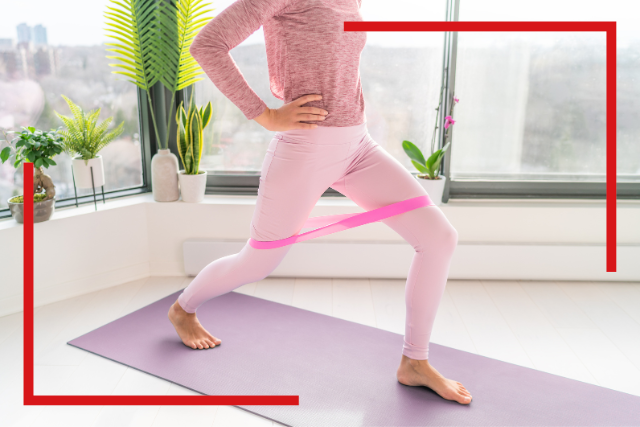
Bands are particularly effective for certain muscle groups and it's worth knowing where they shine brightest. The glutes respond exceptionally well to band work, especially loop bands placed just above the knee during squats, bridges and lateral walks. The added resistance forces the glutes to activate more fully than they might in a bodyweight-only version of those movements.
The upper back, shoulders and biceps are also very well suited to band training. Rows, lateral raises and curls all translate extremely well to band variations and can be done from a door anchor or simply by standing on the band. The core benefits too, since many band exercises require you to brace and stabilise throughout the movement. The legs, chest and triceps can all be trained effectively with bands as well, though these muscle groups tend to benefit most when bands are combined with other forms of resistance as you progress.
Can Bands Build as Much Muscle as Weights?
It's probably the question you came here for, so here's the honest answer. For beginners and intermediate trainers, resistance bands are absolutely capable of building significant muscle. The stimulus is real, the progressive overload principle applies just as much as it does with weights and the convenience of being able to train at home consistently often means people actually do the sessions rather than skipping them.
Body Sculpture
The convenience of training at home consistently often means people actually do the sessions rather than skipping them.
Where bands start to show their limits is at more advanced levels of training. If you're already strong and conditioned, you'll eventually reach a point where even the heaviest resistance bands don't provide enough challenge for larger muscle groups like the quads, hamstrings and chest. At that stage, adding dumbbells or kettlebells into your routine becomes the natural next step and the two work brilliantly together. If that's the direction you're heading, our guide on using dumbbells for full-body training at home is worth reading alongside this one.
How to Keep Progressing With Bands as You Get Stronger
One of the most common mistakes people make with resistance band training is sticking with the same band at the same tension for months without making things harder. Progressive overload works with bands just as it does with any other form of resistance and you just need to be intentional about it. There are several straightforward ways to keep progressing:
- Move up to a heavier resistance band or double up two bands on the same exercise
- Slow down your reps, particularly the lowering phase, to increase the time your muscles are under tension
- Reduce rest periods between sets to keep the intensity high
- Add more reps or sets over time before moving to a harder band
- Change your anchor point or stance to alter the angle and increase the challenge

▶ Pro Tip
Try slowing your reps to a 3-second lowering phase. This technique, known as eccentric training, dramatically increases muscle tension without needing a heavier band. It is one of the most effective ways to keep progressing without buying new equipment.
Progression is the engine of muscle growth regardless of what equipment you're using and bands give you plenty of ways to keep driving it forward.
The Role of Diet in Building Muscle With Resistance Bands
Training is only one half of the equation. You can do everything right with your bands and still struggle to build muscle if your diet isn't supporting the process. Muscle growth requires a surplus of protein because protein is what your body uses to repair and build muscle tissue after training. Most guidance suggests aiming for around 1.6 to 2.2 grams of protein per kilogram of body weight per day if muscle building is your goal, though individual needs vary.
Carbohydrates matter too. They're your body's primary fuel source during exercise and going into a session under-fuelled means you won't be able to train at the intensity needed to drive real progress. Eating a balanced meal with both protein and carbohydrates in the two to three hours before training and having a protein-rich snack or meal afterwards gives your muscles what they need to recover and grow. Building muscle at home with resistance bands is absolutely achievable, but pairing your training with proper nutrition is what takes it from good to very effective.
Best Resistance Band Exercises for Building Muscle at Home
One of the best things about bands is just how many movements you can do with them. Here's a breakdown of the most effective exercises by muscle group:
| Muscle Group | Exercises | Band Type |
|---|---|---|
| Glutes and Lower Body | Banded squats, Romanian deadlifts, glute bridges, lateral walks | Loop band |
| Upper Back and Shoulders | Resistance band rows, face pulls, lateral raises | Tube band with handles |
| Arms | Bicep curls, tricep extensions | Tube band with handles |
| Chest | Chest press, chest fly using a door anchor or floor | Tube band with handles |
| Core and Stability | Weighted Russian twists, farmer's carries, renegade rows | Any band |
Many of the movements that work well for rehabilitation and recovery translate directly into a muscle-building routine when you increase the resistance. Our resistance band exercises for injury recovery post covers this really well, and if you want to see what's available at different resistance levels, the full Body Sculpture resistance equipment range is a good place to start.
Common Mistakes That Limit Your Results With Resistance Bands
Getting results with bands comes down to using them correctly and there are a few habits that tend to hold people back. The most common is using a band that's too light. It might feel comfortable, but if you're not genuinely challenged by the last two or three reps of a set, the band isn't providing enough stimulus to drive growth. Another common mistake is rushing through reps without controlling the movement, particularly on the way back to the starting position. That controlled lowering phase, known as the eccentric, is where a lot of muscle development happens and skipping it is leaving progress on the table.
Form matters just as much with bands as it does with any other equipment. Without a physical weight to keep you focused, technique can slip without you immediately noticing, but poor movement patterns mean you're not targeting the right muscles and your injury risk increases over time. Pairing good form with a solid warm-up and cool-down routine is one of the most effective things you can do to keep training consistently without minor injuries disrupting your progress.
Who Are Resistance Bands Best Suited To?
Resistance bands suit a wide range of people, which is part of what makes them such a popular piece of home gym equipment. They're an excellent starting point for beginners who want to build a foundation of strength without investing heavily in equipment upfront. They're also ideal for anyone returning from injury, since the lower-impact, controllable nature of band resistance makes them one of the safest ways to rebuild strength gradually.
For people who travel regularly or don't have a dedicated training space at home, bands are hard to beat because they pack down to almost nothing and can be used anywhere. For more experienced trainers, resistance bands work brilliantly as a complement to free weights, adding variety, targeting smaller stabilising muscles and giving you an effective option on days when a full weights session isn't possible. They also slot neatly into a wider home setup and if you're still working out what else is worth having, our 5 home gym essentials for beginners will help you figure out what's worth the investment.
How to Build a Consistent Resistance Band Routine
Having the bands is one thing. Using them regularly enough to see results is another. Consistency is the single most important variable in any training programme and the good news is that resistance band workouts at home remove most of the barriers that usually get in the way. There's no commute, no waiting for equipment and sessions can be as short as 20 to 30 minutes.
Structuring your week so that you're hitting each muscle group at least twice is a solid approach for muscle building. That might look like three full-body sessions per week, or a simple upper and lower body split across four days. The key is finding a structure that fits your schedule and that you'll actually stick to. Our post on how to build a routine when your schedule is unpredictable is worth a read if that sounds familiar.
Are Resistance Bands Worth Buying for Muscle Building?
For almost everyone asking this question, the answer is yes. They're affordable, they take up virtually no space, they're suitable for a huge range of exercises and fitness levels and they're capable of producing real muscle growth when used with the right approach. The only caveat is that advanced trainers will eventually need to supplement them with free weights to keep progressing on larger muscle groups.
If you're just getting started with home workouts and want to build strength without a significant upfront investment, bands are one of the smartest first purchases you can make. If you're already training and want to add variety or fill gaps in your current routine, they slot in brilliantly alongside dumbbells, kettlebells and other strength equipment you might already have. It's also worth reading our top 5 mistakes to avoid when buying home gym equipment before you commit to anything, so you know you're investing in the right things from the start.
Resistance bands can absolutely build muscle and for most people training at home they're one of the most practical and effective tools available. The key is using them with enough tension to challenge your muscles, progressing consistently over time and pairing your training with a diet that supports recovery and growth. Used correctly, they're far more capable than most people give them credit for.
Key Takeaways
- Resistance bands can build real muscle and the science backs it up
- They are ideal for beginners, travellers and home gym setups
- Progressive overload works just as well with bands as with weights
- Diet and consistency are just as important as the equipment you choose
- Advanced trainers may eventually benefit from combining bands with free weights
Frequently Asked Questions
How long does it take to build muscle with resistance bands?
Most people begin to notice strength improvements within four to six weeks of consistent training, with visible muscle changes typically appearing after eight to twelve weeks. Results depend on training frequency, diet and how consistently you apply progressive overload.
Can I use resistance bands every day?
You can use them daily if you vary the muscle groups you're targeting. However, giving each muscle group at least 48 hours of recovery between sessions is important for growth. Full-body sessions are best done three times per week with rest days in between.
What resistance band should a beginner start with?
A light to medium resistance band is the best starting point for most beginners. You should be able to complete 10 to 12 reps with good form, but feel genuinely challenged by the final few reps. If it feels too easy throughout, move up a resistance level.
Are resistance bands good for weight loss as well as muscle building?
Yes. Resistance band training builds lean muscle, which increases your resting metabolic rate over time. Combined with a healthy diet, regular band workouts can support both fat loss and muscle development simultaneously.
Do resistance bands snap or wear out?
Good quality bands are durable, but they should be checked regularly for nicks, cracks or thinning areas, especially near the ends. Avoid using bands in extreme heat or cold and store them away from direct sunlight to extend their lifespan.
Found this helpful? Share it with someone who is thinking about starting their home fitness journey. A little nudge can go a long way.
Ready to Get Started?
Browse the full Body Sculpture resistance band range, designed for real results in real homes. With over 50 years of expertise, we are here to help you find the right fit for your goals and your space.
Shop Resistance Bands50+ Years Expertise Designing equipment since 1975 | ★★★★★ Trustpilot Rated Excellent by our customers | FREE UK Delivery On all qualifying orders | 24/7 Expert Advice Our team is happy to help |