Staying consistent with fitness can feel straightforward when life is calm and structured. But when your schedule is unpredictable, whether due to work shifts, family commitments, travel or busy periods, maintaining a regular routine can quickly become challenging. It's easy to feel like you're constantly starting again, especially when your free time changes from week to week.
The good news is that consistency doesn't have to mean doing the same workout at the same time every day. With the right approach, it's possible to stay active even when life feels busy or uncertain. The key is building a routine that is flexible enough to fit around your lifestyle rather than relying on perfect conditions. Here are some practical and realistic ways to stay on track no matter what your week looks like.
In This Article
Build Small Habits Rather Than Perfect Routines
When your days look different from week to week, long or complex workout plans can be hard to stick to. Instead of aiming for perfect sessions, focus on small habits you can repeat regularly. Consistency often comes from doing what feels manageable, not what feels extreme.
Did You Know?
Research in behavioural science consistently shows that small, repeatable actions produce more lasting habits than ambitious plans that rely on motivation. A 10-minute walk done daily creates a stronger habit loop than an hour-long gym session done sporadically.
Even short workouts create momentum. A 15-minute walk, a quick strength circuit or a short cardio session all count. These small efforts help you stay connected to your routine even when time is limited. If you need inspiration, our guide on how to fit mini workouts into your day is full of practical ideas that work even on your busiest days.
Find Workout Times That Work With Your Schedule
One of the biggest barriers to consistency is thinking you need a set time each day to exercise. In reality, flexibility is often more sustainable, especially when life is unpredictable. If you miss your usual workout slot, it shouldn't feel like the whole day is a write-off.
Instead of scheduling workouts for one specific hour, try giving yourself a time window. For example, you might train at any point during the morning or whenever you find a spare 20 minutes in the evening. This makes fitness feel easier to fit in naturally rather than something that has to happen at the exact same time every day. Over time, this mindset helps you stay consistent without unnecessary pressure.
Body Sculpture
"Consistency isn't about strict routines. It's about finding realistic ways to keep moving, even when life gets busy."
Make Exercise Easier With Home Fitness Equipment
When your schedule is unpredictable, convenience makes an enormous difference. The easier it is to start a workout, the more likely you are to follow through. Removing barriers is one of the simplest and most effective ways to stay consistent over time.
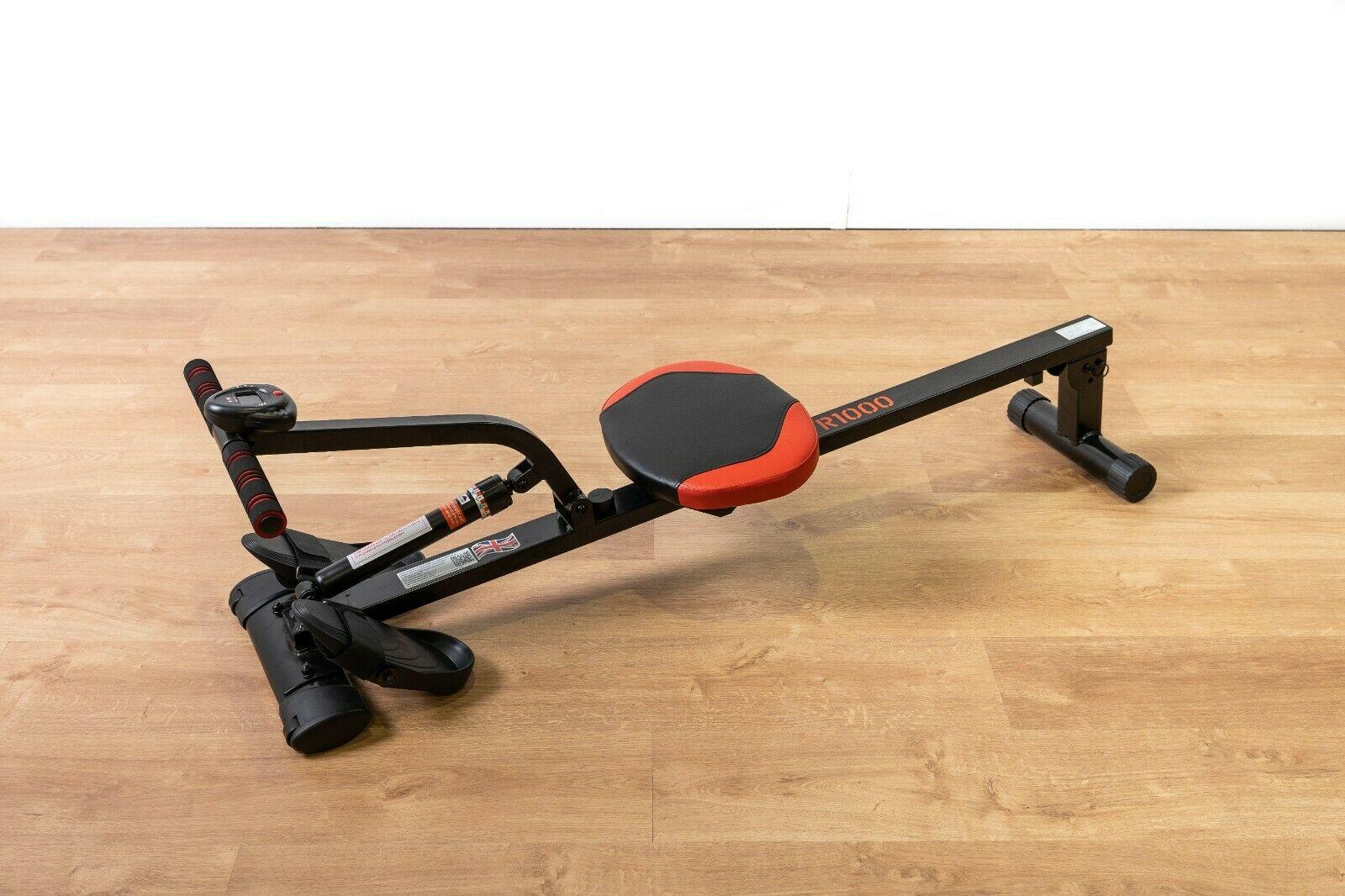
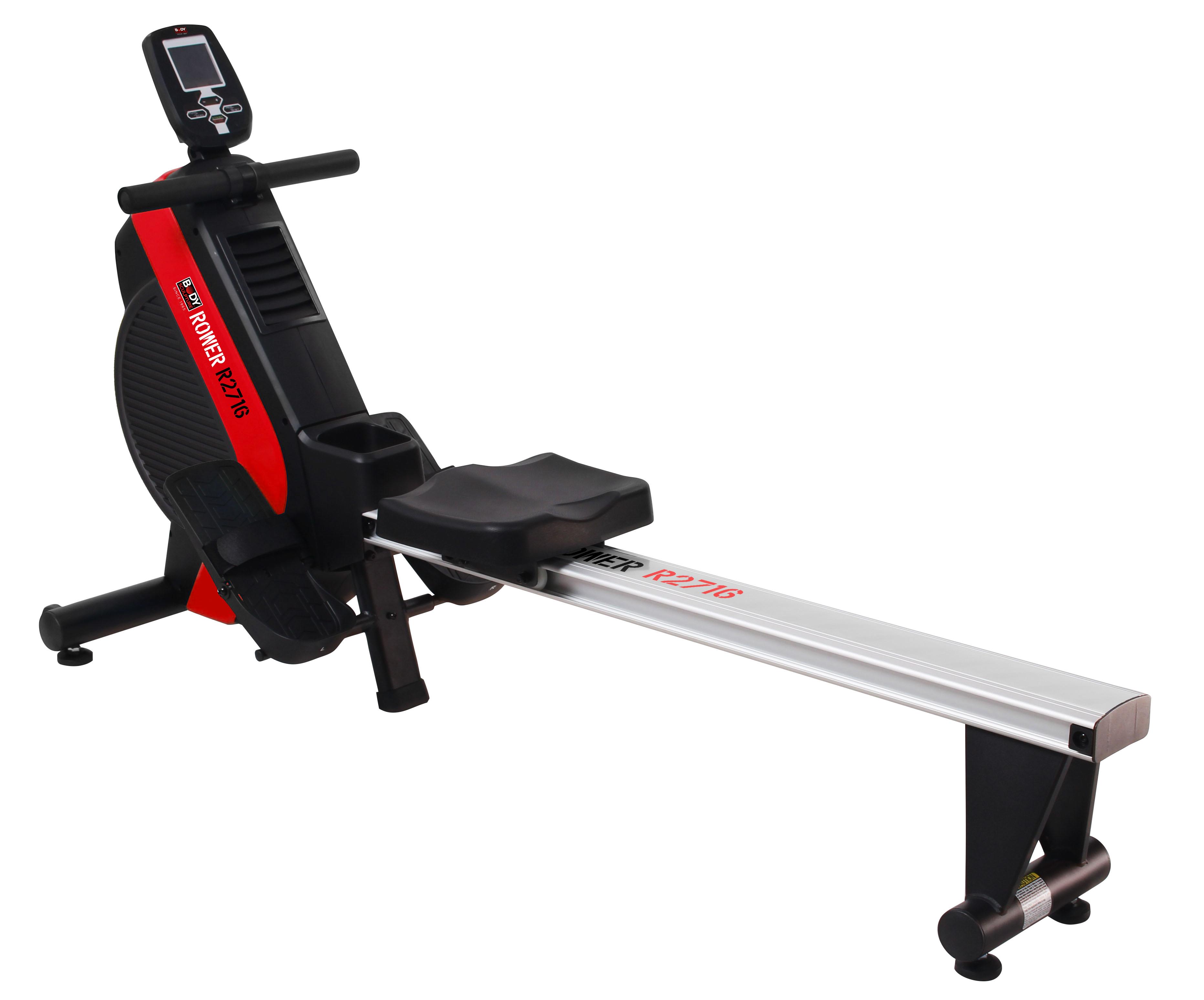
Having home fitness equipment ready to use, such as an exercise bike, a set of dumbbells or a compact treadmill, allows you to fit movement into your day without extra planning. You don't need to commute to a gym or wait for the right moment to leave the house. Even a short session at home can be enough to keep your momentum going. The easier you make it to begin, the more likely you are to keep moving regularly.
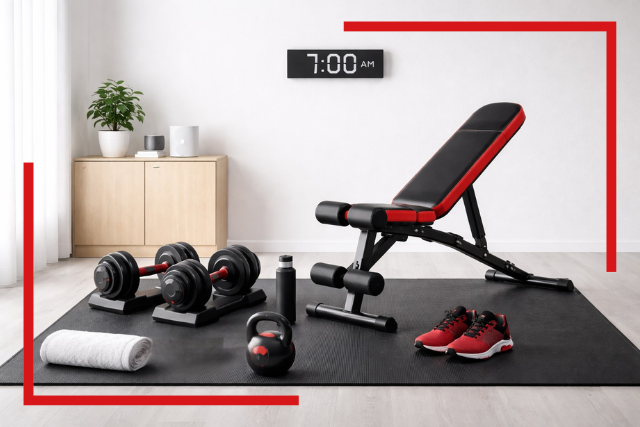
Keeping equipment visible rather than packed away is one of the most underrated consistency strategies available. A resistance band left on the sofa or dumbbells by the desk remove the decision to start almost entirely. Our guide on how to set up a home gym covers exactly how to create a practical space that makes this work.
How Short Workouts Help You Stay Consistent
Many people assume workouts need to be long to be effective, but shorter sessions deliver real results when done regularly. In fact, shorter workouts are often more realistic when life is busy. The goal is simply to keep showing up in whatever way is possible.
▶ Pro Tip
When you only have 10 minutes, resist the temptation to skip. A 10-minute session done consistently three times across the week builds more fitness and more habit strength than a 60-minute session done occasionally. It's the showing up that matters most, not the duration.
A quick routine could include 10 minutes of brisk walking, a short treadmill incline session, bodyweight squats and lunges, resistance band exercises or stretching and mobility work. Short workouts are easier to slot into busy days and they help you stay active without feeling overwhelmed. Over time, these sessions build strength, fitness and confidence even if they're only 15 to 20 minutes long. Our post on the rise of short workouts and why they actually work explores the science behind this in more detail.
Set Weekly Fitness Goals Instead of Daily Routines
When life is unpredictable, aiming for a weekly target often works better than a rigid daily schedule. Rather than thinking you must work out every single day, try something like aiming to move three or four times across the week. This approach allows for flexibility while still keeping you focused and accountable.
Weekly goals give you breathing space. If one day becomes too busy, you can still fit movement in later without feeling like you've failed or fallen off track. It also helps you stay motivated because you're working toward consistency across the week rather than chasing perfection each day. Some weeks will naturally be more demanding than others. During hectic periods it helps to simplify your routine rather than abandon it completely. Fitness doesn't always have to be about progression, sometimes it's simply about maintaining movement. Our blog on how to shift your fitness routine when the seasons change explores how to adapt your approach through naturally busier or more demanding periods of the year.
Keep Simple Go-To Workouts Ready
Decision fatigue is real when life is busy. If you're constantly wondering what workout to do, it becomes much easier to skip it altogether. Having simple, familiar routines prepared removes that mental barrier and makes starting almost automatic.
| When You Have | Go-To Workout | Equipment |
|---|---|---|
| 10 minutes | Resistance band circuit or brisk walk | Resistance bands |
| 20 minutes | Treadmill incline walk or steady cardio session | Treadmill or exercise bike |
| 30 minutes | Full-body dumbbell or kettlebell circuit | Dumbbells or kettlebells |
| Low energy day | Gentle stretching, mobility work or Pilates routine | Yoga mat |
| Away from home | Bodyweight circuit: squats, press-ups, lunges, planks | None needed |
Keeping workouts familiar makes consistency easier, especially when time is limited. The less thinking required, the easier it is to start. Over time, these go-to sessions help you stay active no matter what your week looks like.
Consistency Over Perfection: The Right Mindset
Unpredictable schedules can make fitness feel frustrating, but progress isn't about doing everything perfectly. It's about continuing to show up, even in smaller ways. Staying active through busy seasons is an achievement in itself and one worth recognising.
Fitness is also easier to maintain when it feels supportive rather than stressful. Instead of viewing exercise as another item on your to-do list, try using it as a reset in your day. A short session can boost energy, clear your head and improve your mood even if it's not long or intense. Movement doesn't always need to be hard to be valuable. Sometimes a gentle walk or quick stretch is exactly what your body needs during a busy week.
A consistent routine doesn't have to look the same as someone else's. For some it's daily workouts. For others it's moving a few times a week or simply staying active whenever possible. When you stop comparing your routine to others, it becomes easier to focus on what works for your own life and schedule. Every workout you complete, every walk you take and every effort you make counts. Over time, those small actions build confidence, strength and lasting habits.
Key Takeaways
- Small, repeatable habits build more lasting consistency than ambitious plans that rely on perfect conditions
- Give yourself a time window rather than a fixed workout time to make flexibility feel intentional rather than like failure
- Home equipment removes the single biggest barrier to exercise: the decision to go somewhere and start
- Weekly movement targets work better than daily schedules when life is genuinely unpredictable
- Having familiar go-to workouts removes decision fatigue and makes it easier to start even on hard days
Frequently Asked Questions
How do I stay consistent with exercise when I work irregular hours?
Focus on weekly targets rather than daily schedules. Aiming to exercise three to four times across any seven-day period gives you the flexibility to move those sessions around as your shifts change. Keeping equipment at home removes the commute barrier entirely, which is particularly valuable when your available time windows are short and unpredictable.
What's the minimum amount of exercise I can do and still see results?
Even two or three sessions of 20 minutes per week produces measurable improvements in cardiovascular fitness, strength and mental wellbeing over time. The key is consistency across weeks and months rather than the length of any individual session. Doing less than you'd ideally like, regularly, outperforms the perfect plan done occasionally.
How do I stop feeling guilty when I miss workouts?
Shift your focus from daily perfection to weekly consistency. Missing one session is completely normal and has no meaningful effect on your progress if you keep going. What matters is your pattern over weeks, not any individual day. Acknowledging that unpredictable schedules require flexible routines removes the guilt and makes it far easier to simply pick up where you left off.
What home equipment is best for a busy, unpredictable lifestyle?
Equipment that's easy to access, takes no setup time and covers multiple types of workout. Resistance bands left somewhere visible are the most versatile and lowest-friction option. A pair of dumbbells nearby and a compact exercise bike or folding treadmill cover most training needs without requiring a large dedicated space or significant setup time.
Does exercise actually help when you're stressed and busy?
Consistently, yes. Even short bouts of physical activity reduce cortisol levels, improve mood and restore mental clarity in ways that make the rest of a busy day feel more manageable. The irony is that exercise is easiest to skip when you're busiest, but that's often when it delivers the most benefit. A 15-minute walk or a quick resistance band circuit is almost always worth the time it takes.
Found this helpful? Share it with someone who keeps saying they'd exercise more if their schedule was more consistent.
Make Fitness Fit Your Routine
Explore the full Body Sculpture range of home fitness essentials, including treadmills, exercise bikes and strength-training equipment designed for real people with real schedules. With over 50 years of expertise, we are here to help you stay in shape and in control.
Shop the Full Range50+ Years Expertise Designing equipment since 1975 | ★★★★★ Trustpilot Rated Excellent by our customers | FREE UK Delivery On all qualifying orders | 24/7 Expert Advice Our team is happy to help |