If you've ever talked yourself out of exercising because you only had 20 minutes spare, it might be time to rethink what 20 minutes can actually do. For a long time, the fitness world pushed the idea that anything less than an hour wasn't really worth doing. That thinking has held a lot of people back and it's simply not true. Short workouts have become one of the biggest shifts in how people approach fitness and the science behind why they work is genuinely compelling. This post covers all of it, from what the research says, to the best formats to try, to how to build it into a routine that actually sticks.
In This Article
Why Short Workouts Are the Biggest Shift in Home Fitness
Life is busier than it's ever been. Long working hours, family commitments, commutes and packed schedules mean that finding a clear hour to exercise is genuinely difficult for most people. The traditional model of fitness, which assumed you had time to get to a gym, train for an hour and travel back, doesn't reflect how the majority of people actually live.
At the same time, social media has played a real role in shifting attitudes. Short, accessible workouts have been shared by millions of people showing that you don't need a gym, loads of equipment, or a huge chunk of time to get results. That visibility has changed what people expect from exercise and opened the door to a much more flexible, realistic approach to staying active. The barriers that used to stop people have quietly started to fall away.
What the Science Says About Short Workouts
A study published in PLOS One, one of the world's leading science and health research journals, found that short, intense bursts of exercise can produce similar improvements in cardiovascular fitness to much longer workouts. Each session in the study lasted around 10 minutes including warm-up and cool-down, but the actual hard effort was just three 20-second all-out sprints, roughly one minute of real effort per session. Done three times a week, that's just three minutes of intense exercise in total.
Did You Know?
Research on NEAT (Non-Exercise Activity Thermogenesis) shows that small bursts of movement throughout the day, such as walking to make a coffee or taking the stairs, have a genuinely meaningful impact on your health and energy levels. Movement doesn't need to be long or structured to count. It just needs to happen.
The All-or-Nothing Mindset That Stops People Exercising Consistently
One of the biggest barriers to consistent exercise isn't a lack of motivation or time. It's the belief that a short session doesn't count. People convince themselves that if they can't do a full workout, there's no point starting at all. That thinking leads to skipped sessions, lost momentum and eventually drifting away from exercise altogether.
Body Sculpture
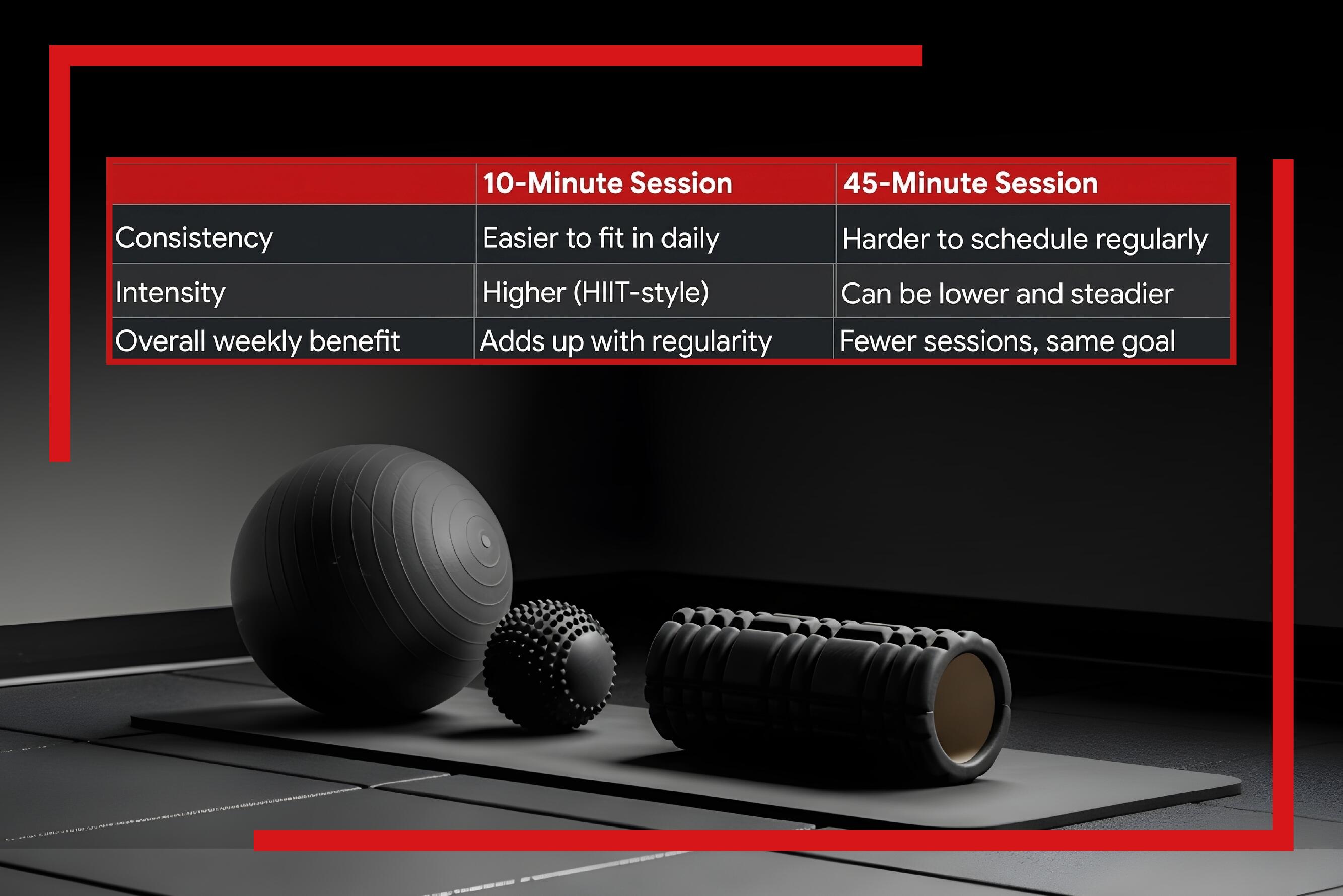
A 15-minute workout done consistently will always produce better results than a 60-minute session done occasionally.
Consistency is the single most important factor in long-term fitness progress and short workouts make it far easier to achieve because the barrier to starting is so much lower. If you struggle to keep things regular, building a consistent routine around your schedule is easier than most people think and it starts with letting go of the idea that shorter means less worthwhile.
What Counts as a Short Workout and What Works Best
A short workout is generally anything in the 10 to 30-minute range, though what you do in that time matters a great deal. The most effective formats include:
- HIIT (High Intensity Interval Training), which alternates between short bursts of effort and brief rest periods to keep your heart rate elevated and your body working hard throughout
- Circuit training, where you move through a series of exercises back to back with minimal rest, hitting multiple muscle groups in a short window
- Quick cardio sessions on a bike, treadmill, or cross trainer that prioritise intensity over duration
- Short Pilates or mobility sessions that focus on control, breathing and targeted movement rather than pushing your heart rate. If Pilates is new to you, our guide on why everyone is talking about Pilates and how to try it at home is a good place to start.
Each format works differently and suits different goals, but they all make the most of limited time in their own way.
The Real Fitness Benefits of Shorter and More Frequent Workouts
Beyond the obvious convenience, there are some genuine fitness benefits to shorter, more frequent sessions that often get overlooked. Training more often, even briefly, keeps your metabolism more consistently active than training hard once or twice a week with long gaps in between. It also reduces the mental load of exercise because you're never staring down a long, demanding session that requires a lot of motivation to start.
There's a real mental health angle here too. Regular movement, even in small doses, has a well-documented positive effect on mood, stress levels and energy. A 20-minute session in the morning can set the tone for the rest of the day in a way that's hard to replicate by skipping it entirely. The benefits of exercise aren't reserved for people doing lengthy gym sessions. They're available to anyone who moves regularly, regardless of how long each session lasts.
Are Short Workouts as Effective as Longer Training Sessions?
It's worth being straightforward here. If your goal is to build significant muscle mass, train for a specific endurance event, or hit very targeted performance goals, longer sessions are still going to play a role in your programme. Short workouts aren't a magic replacement for everything and it wouldn't be honest to suggest otherwise.
What they are genuinely excellent for is general fitness, fat loss, cardiovascular health, maintaining strength and building the kind of consistency that produces lasting results. For the vast majority of people who want to feel fitter, look better and have more energy day to day, short workouts are more than enough to get there.
The Best Short Workout Formats for Weight Loss, Strength and Fitness
The right short workout depends on what you're actually trying to achieve. Here's a quick breakdown:
| Goal | Best Format | Recommended Equipment |
|---|---|---|
| Fat Loss and Cardio | HIIT, high-intensity cardio | Exercise bike, treadmill, cross trainer |
| Strength and Tone | Resistance circuits | Dumbbells, kettlebells, resistance bands |
| Recovery and Mobility | Pilates, stretching, mobility work | Yoga mat, resistance bands, Pilates accessories |
| General Fitness | Circuit training, mixed cardio | Any combination of the above |
How to Structure a Short Workout to Get the Best Results
Getting the most out of a short session comes down to having a clear structure before you start. With limited time, every minute needs to count, which means knowing what you're doing rather than figuring it out as you go. A well put-together short workout generally follows this kind of shape:
- A two to three minute warm-up to get your blood moving, your joints ready and your body prepared for what's coming
- A focused working block of 12 to 20 minutes depending on your available time and format
- A short cool-down and stretch to bring your heart rate down and help your muscles recover
▶ Pro Tip
Never skip the warm-up to save time. It's one of the most reliable ways to pick up a minor injury that sets you back far longer than the two minutes you saved. Even a quick 90-second warm-up is better than nothing at all.
How to Make Short Workouts a Habit That Sticks
The practical side of building a short workout habit is just as important as the workout itself. The single biggest factor is reducing friction, which means making it as easy as possible to actually start when the time comes. Keeping your equipment accessible, choosing a consistent time of day and linking your workout to something you already do (like straight after your morning coffee or right before lunch) all make it significantly more likely you'll follow through rather than talk yourself out of it.
Habit stacking is a particularly effective technique here. Rather than treating exercise as a separate event that requires its own motivation, attaching it to an existing routine makes it feel automatic over time. Our post on how to build a consistent routine when your schedule is unpredictable is packed with practical ideas for weaving movement into a busy schedule without it feeling like a chore.
The Best Home Gym Equipment for Short Workouts
When time is tight, the equipment you use needs to be versatile, quick to set up and easy to put away. Heavy, bulky machines that require a long setup or take up permanent floor space aren't ideal when you've only got 20 minutes. The kit that tends to get used most consistently is the stuff that's always ready to go.
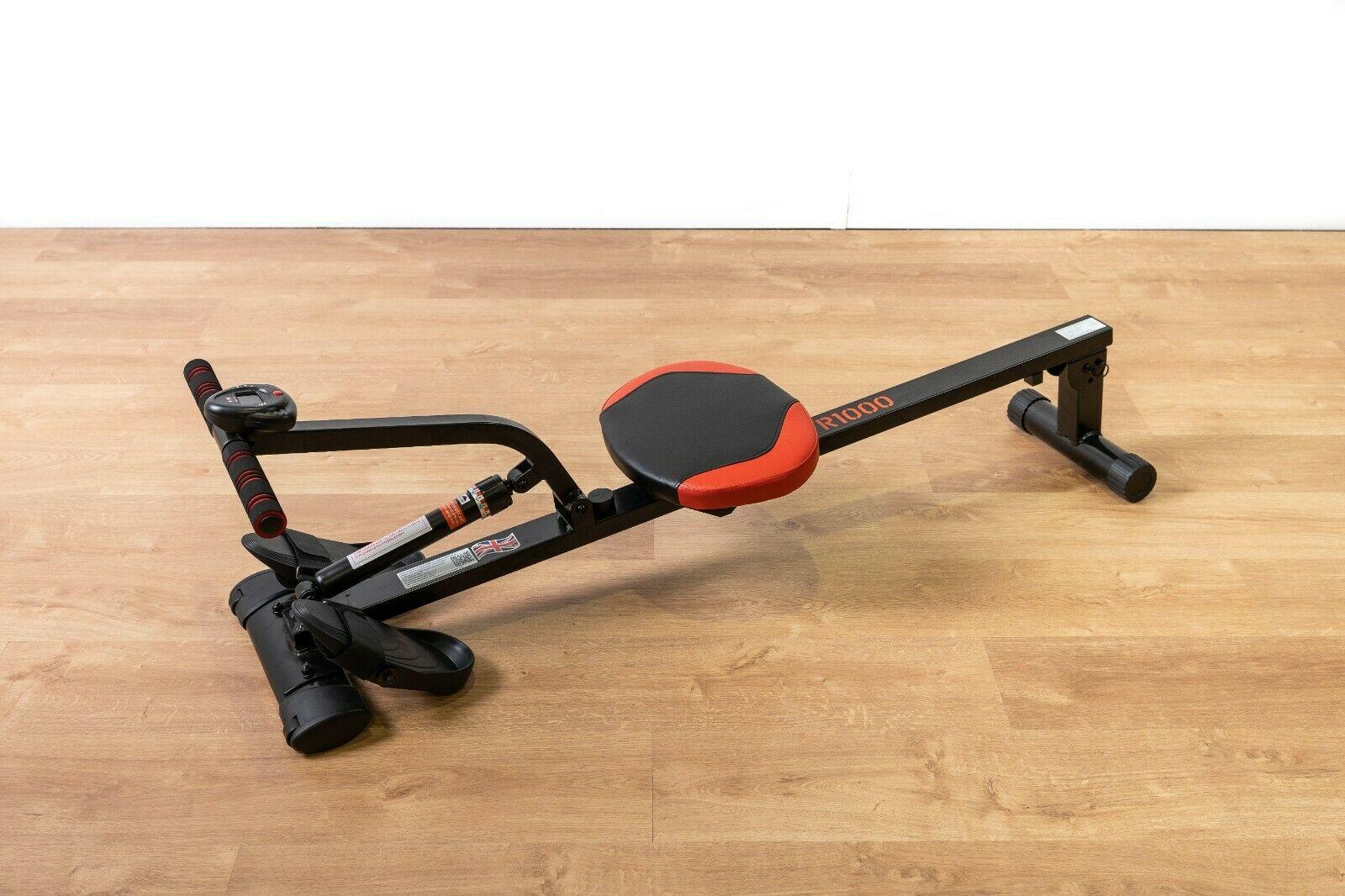
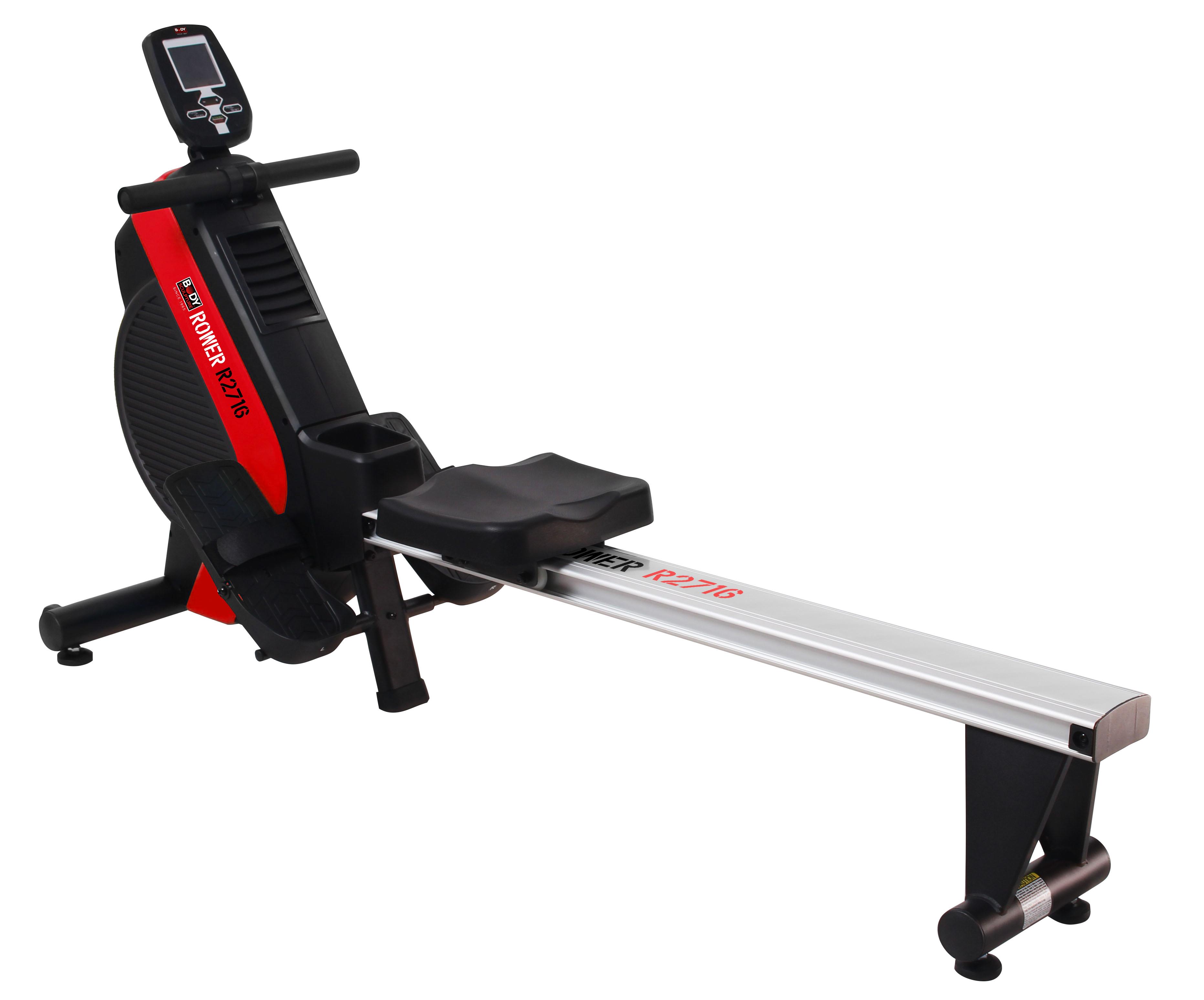
Resistance bands are particularly well suited to short sessions because they're lightweight, take up almost no space and work across a huge range of exercises targeting every muscle group. Dumbbells and kettlebells are similarly flexible and can deliver a surprisingly complete workout in a short time frame. For cardio, a compact exercise bike, cross trainer, or rowing machine lets you get your heart rate up fast without leaving the house. For more ideas on weaving these short sessions into a packed day, our guide on how to fit mini workouts into your day covers practical ways to make it happen.
Can Short Home Workouts Replace a Gym Membership?
For a lot of people, it's definitely possible. If your goals are centred around general health, maintaining a healthy weight, building functional strength and feeling good day to day, a consistent home workout routine built around short sessions can absolutely replace a gym membership. The key word is consistent. A well-used set of resistance bands and a compact cardio machine used regularly will do far more for your health than a gym membership that gets used twice a month.
That said, if you thrive in the social environment of a gym, enjoy access to a wide variety of heavy equipment, or have very specific performance targets, the gym still has its place. Short workouts and home training aren't about being anti-gym. They're about removing the barriers that stop people from exercising regularly and finding an approach that fits around real life. If you're just starting out and want to know what equipment is actually worth having at home, our 5 home gym essentials for beginners gives you a clear place to begin.
Short workouts work and the evidence behind them is stronger than ever. Whether it's a 15-minute HIIT session, a quick circuit with dumbbells, a focused session on the bike, or a short Pilates session, doing something consistently will always beat doing nothing while you wait for the perfect window of time.
Key Takeaways
- Short workouts of 10 to 30 minutes can be just as effective as longer sessions
- Consistency always beats duration when it comes to long-term results
- The all-or-nothing mindset is one of the biggest barriers to regular exercise
- HIIT, circuits, cardio and Pilates all work brilliantly in a short format
- The right home equipment makes short sessions easier to start and stick to
Frequently Asked Questions
How short is too short for a workout?
Even 10 minutes of focused movement has genuine health benefits. Research shows that very short bursts of high-intensity effort can improve cardiovascular fitness meaningfully. There's no hard minimum, though sessions under 10 minutes may not leave enough time for a proper warm-up and cool-down.
How many short workouts should I do per week?
Three to five sessions per week is a solid target for most people. That could be three 20-minute sessions, or five shorter 10 to 15-minute sessions. The key is hitting each muscle group at least twice a week if strength is a goal, or keeping cardio sessions consistent if fitness or fat loss is the priority.
Is HIIT or steady cardio better for a short workout?
Both work well but for different goals. HIIT is more effective for burning calories quickly and improving cardiovascular fitness in minimal time. Steady cardio is lower impact, easier to recover from and better suited to longer sessions or days when you want something less intense.
Can I build muscle with just short workouts?
Yes, particularly if you're a beginner or intermediate trainer. Focused resistance circuits using dumbbells, kettlebells, or resistance bands can stimulate real muscle growth in 20 to 30 minutes. Progressive overload, meaning gradually increasing the challenge over time, matters far more than session length.
What equipment is best for short home workouts?
Resistance bands, dumbbells and a compact cardio machine are the most versatile options for short sessions. They're quick to set up, cover a huge range of exercises and take up minimal space. The best equipment is whatever you'll actually use consistently.
Found this helpful? Share it with someone who keeps putting off their workouts because they don't have enough time. It might be just the nudge they need.
Build Your Short Workout Setup
Browse the full Body Sculpture range, designed for real results in real homes. Everything we make is built to help you stay in shape and in control, whatever your routine looks like.
Shop the Range50+ Years Expertise Designing equipment since 1975 | ★★★★★ Trustpilot Rated Excellent by our customers | FREE UK Delivery On all qualifying orders | 24/7 Expert Advice Our team is happy to help |