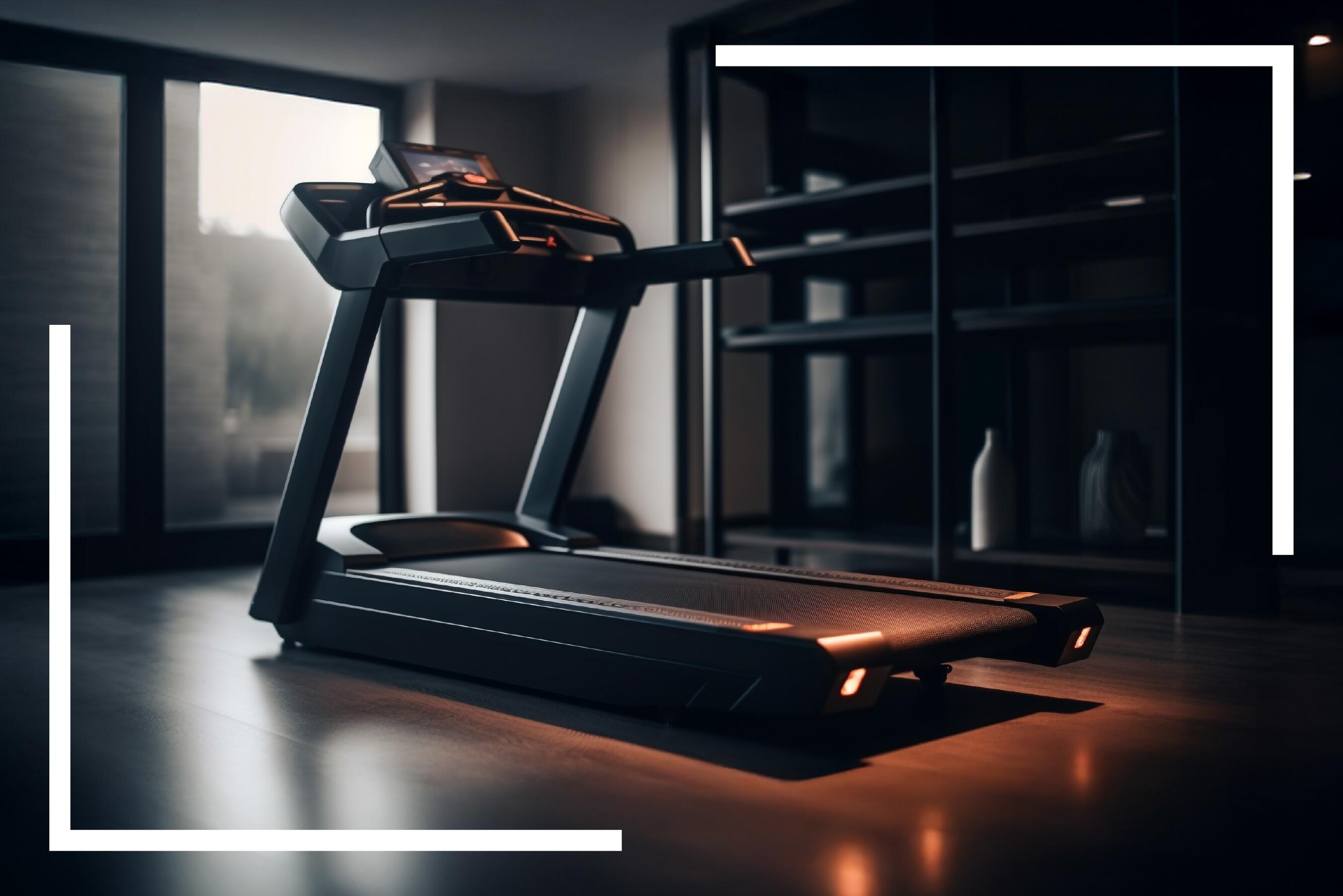
If you've ever considered adding a treadmill to your home gym, you might be wondering what it actually does for your body beyond simply burning calories. The answer is quite a lot. Regular treadmill use has a measurable positive impact on your cardiovascular health, mental wellbeing, joint strength, metabolism and posture, all from a single piece of equipment you can use year-round regardless of weather, time of day or what's happening outside.
In this guide we'll break down the specific benefits of regular treadmill use, explore how different types of training on a treadmill produce different results and help you understand how to make the most of one at home.
In This Article
What a Treadmill Does for Your Heart and Lungs
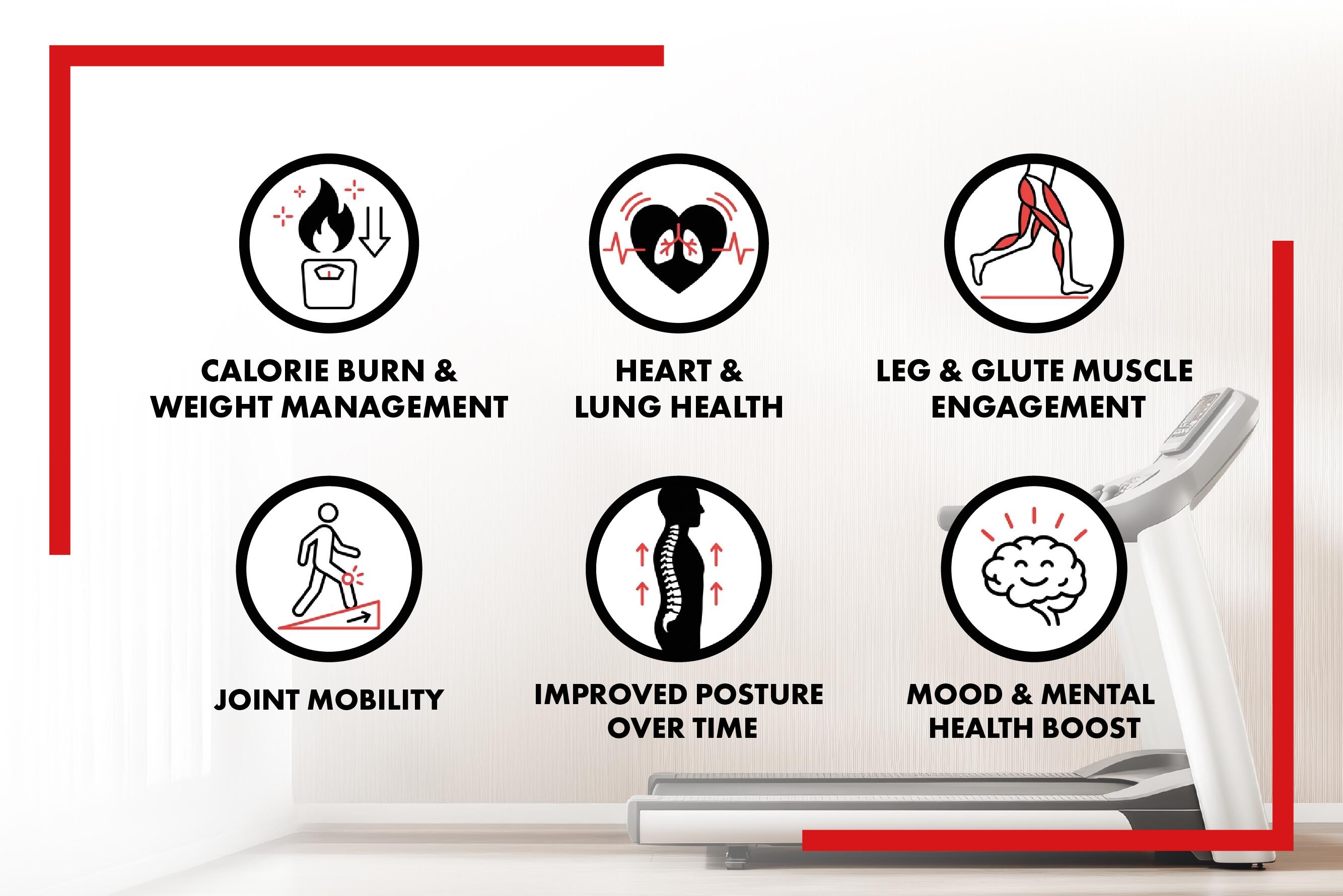
The most well-documented benefit of regular treadmill use is what it does for your cardiovascular system. Whether you're walking briskly, jogging or running, sustained treadmill exercise elevates your heart rate and keeps it elevated, which over time makes your heart stronger and more efficient.
Did You Know?
The NHS recommends at least 150 minutes of moderate-intensity cardio per week for adults to maintain cardiovascular health. A treadmill is one of the most reliable and controllable ways to achieve this at home, regardless of weather, season or time of day.
A stronger heart pumps blood more efficiently with each beat, which means it doesn't need to work as hard at rest. Over weeks and months of consistent treadmill use, resting heart rate typically decreases, blood pressure improves and your lung capacity increases as your body becomes more efficient at delivering oxygen to working muscles. These are some of the most valuable long-term health adaptations that regular cardiovascular exercise produces.
How a Treadmill Supports Weight Management
Treadmills are one of the most effective tools for burning calories in a home setting. Running at a moderate pace burns between 500 and 900 calories per hour depending on body weight and intensity, while brisk walking burns between 250 and 450. Incline walking, which is often underestimated, can push calorie burn close to jogging levels while keeping the impact significantly lower.
Beyond the calories burned during the session itself, regular treadmill use increases your body's resting metabolic rate over time. This is because cardiovascular training preserves and builds lean muscle and muscle tissue burns more calories at rest than fat tissue. The result is that consistent treadmill training gradually increases the number of calories your body uses throughout the day, not just during exercise. Combined with a balanced diet, regular treadmill sessions are a highly effective tool for managing body weight over the long term. For a detailed comparison of how treadmills stack up against other machines for calorie burn, our guide on which cardio equipment burns the most calories covers this clearly.
What a Treadmill Does for Your Muscles
Walking and running on a treadmill primarily engages the lower body, but the muscular benefits extend further than most people assume. The key muscle groups that work during every treadmill session are the quadriceps, hamstrings, glutes, calves and hip flexors. These large muscle groups drive each stride and support the body throughout the session.
The core and lower back also engage throughout treadmill sessions, working to stabilise the torso and maintain upright posture with each step. When the incline is increased, the glutes, hamstrings and calves work significantly harder to push through the steeper angle, providing a greater strength stimulus alongside the cardiovascular benefit. Over time, this builds functional lower-body strength that carries directly into everyday activities like climbing stairs, carrying bags and sustaining physical activity for longer without fatigue.
Body Sculpture
"A treadmill does far more than burn calories. Used consistently, it reshapes your body, strengthens your heart and meaningfully improves your mental health."
Is a Treadmill Good or Bad for Your Joints?
This is one of the most commonly asked questions about treadmill training and the honest answer is that it depends on how you use it. Running on any surface places repetitive load on the knee, hip and ankle joints, which can cause issues over time if done excessively, too soon or with poor form.
However, treadmill surfaces are typically more cushioned than outdoor pavements or roads, which reduces the impact per stride. Walking on a treadmill, even at a brisk pace with incline, is genuinely low impact and appropriate for almost anyone. For those with joint concerns, mixing running and walking intervals rather than running continuously, keeping sessions to a sensible duration and incorporating rest days all significantly reduce the cumulative stress on joints.
▶ Pro Tip
Incline walking at 10 to 15% is one of the most underused treadmill features. It pushes calorie burn close to jogging levels while keeping joint impact minimal, making it an excellent option for people who want the metabolic benefits of running without the repetitive load on the knees and hips. Try 25 to 30 minutes at a brisk pace on a steep incline before writing it off as a gentle option.
The Mental Health Benefits of Regular Treadmill Use
The physical benefits of treadmill training are well established, but the mental health benefits are equally significant and often underappreciated. Sustained aerobic exercise, which treadmill sessions provide reliably, triggers the release of endorphins and other mood-regulating neurochemicals that reduce feelings of stress, anxiety and low mood.
Regular runners and walkers consistently report better sleep quality, improved concentration and a stronger general sense of wellbeing than sedentary peers. The relationship between aerobic exercise and mental health is one of the most robust findings in sports science and a treadmill provides a reliable, weather-independent way to access those benefits year-round. Our blog on how to shift your fitness routine when the seasons change explores how maintaining treadmill training through winter specifically protects against the mood and energy dips that shorter days bring.
How a Treadmill Improves Posture and Balance
Maintaining an upright, balanced posture while walking or running on a treadmill actively engages the core, back and hip stabilisers in a way that translates directly into better posture in daily life. People who spend long hours sitting at a desk often find that regular treadmill use gradually counteracts the forward rounding and hip tightness that develop from prolonged sitting.
Balance also improves with regular treadmill use. Coordinating arm swing, leg drive and upright posture at speed requires and develops proprioceptive awareness, which is the body's ability to sense its own position and adjust accordingly. This has particular benefits for older adults for whom balance and fall prevention are important health considerations.
Getting the Most From Your Treadmill Workouts
The type of training you do on a treadmill determines which benefits you access most strongly. Here's how different approaches produce different outcomes:
| Training Style | Primary Benefit | Best For |
|---|---|---|
| Brisk walking | Heart health, fat burning, low joint stress | Beginners, daily movement, active recovery |
| Incline walking | High calorie burn, glute and hamstring strength | Weight loss, lower body toning, joint concerns |
| Steady-state running | Cardiovascular endurance, aerobic base, stamina | Building fitness base, endurance training |
| HIIT intervals | Maximum calorie burn, afterburn effect, fitness gains | Fat loss, time-efficient training, performance |
For most people, combining two or three of these approaches across the week produces the best overall results. Alternating between incline walking sessions and short interval runs covers fat burning, cardiovascular endurance and lower-body strength without overloading the joints with too much running volume. Our post on the rise of short workouts and why they actually work explains how even 20-minute treadmill sessions can produce significant benefits when structured well.
Choosing the Right Treadmill for Home Use
Not all treadmills are designed equally and for home use there are a few things worth prioritising. A motor that can handle sustained use at the speeds you plan to train at, a cushioned belt that absorbs impact, a clear display showing speed, time, distance and heart rate and a folding or compact design that fits your available space all make a real difference to how much you use the machine and how long it lasts.
Body Sculpture's home treadmill range covers options from compact walking treadmills through to motorised models with multiple programmes, speed settings and incline control, designed specifically for home environments. If you're comparing treadmills with other cardio options before deciding, our guide on exercise bike vs treadmill breaks down the key differences clearly and our post on which cardio equipment burns the most calories shows you how everything compares in terms of calorie efficiency.
A treadmill does far more than simply help you burn calories. Used consistently, it strengthens your heart, improves your lung capacity, tones your lower body, supports healthy joints, protects your mental health and improves your posture and balance. It's one of the most complete investments you can make in your long-term health from the convenience of your own home.
Key Takeaways
- Regular treadmill use strengthens the heart, lowers resting heart rate and improves lung capacity over time
- Running burns 500 to 900 calories per hour while incline walking offers high burn with much lower joint impact
- Treadmill training builds functional lower-body strength across the quads, glutes, hamstrings and calves
- Consistent aerobic exercise on a treadmill reliably reduces stress and anxiety and improves sleep quality
- Combining walking, incline and intervals across the week produces the best overall results
Frequently Asked Questions
How long should I walk or run on a treadmill to see results?
Three to five sessions per week of 20 to 45 minutes produces noticeable cardiovascular and body composition changes within four to six weeks for most people. The NHS recommendation of 150 minutes of moderate-intensity cardio per week is a useful benchmark. Consistency matters more than any single session length, so three 30-minute walks done every week reliably outperform occasional longer runs.
Is it better to walk or run on a treadmill for weight loss?
Running burns more calories per minute, but walking at incline burns almost as many while placing significantly less stress on the joints. For long-term weight loss, the best option is the one you can sustain consistently. Many people lose more weight through regular incline walking than sporadic running because they stick with it more reliably. Combining both across the week is the most effective approach if your joints allow it.
Can I use a treadmill every day?
Walking on a treadmill every day is generally fine for most people and is an excellent way to accumulate the recommended weekly activity. Running every day without rest increases injury risk from overuse, particularly in the knees and shins. Most people benefit from at least one or two complete rest days per week if running regularly, or active rest using lighter walking.
Does treadmill walking build muscle?
It builds and maintains functional lower-body muscle, particularly in the quads, glutes, hamstrings and calves. It won't produce the same muscle building effect as dedicated strength training with dumbbells or kettlebells, but combining treadmill cardio with resistance training produces excellent overall results for body composition. Incline walking and running both provide more muscular stimulus than flat walking.
Is a treadmill worth buying for a home gym?
For most people, yes. It provides reliable, weather-independent cardio exercise that supports weight management, heart health and mental wellbeing all in one machine. The key is choosing a model that suits your space, your budget and the type of training you'll actually do consistently. Our guide on the top mistakes to avoid when buying home gym equipment is worth reading before you commit to any large purchase.
Found this helpful? Share it with someone who has been thinking about getting a treadmill but isn't sure if it's worth it.
Find Your Perfect Home Treadmill
Browse the full Body Sculpture treadmill range, designed for real results in real homes. With over 50 years of expertise, we are here to help you find the right model for your goals, your space and your budget.
Shop Treadmills50+ Years Expertise Designing equipment since 1975 | ★★★★★ Trustpilot Rated Excellent by our customers | FREE UK Delivery On all qualifying orders | 24/7 Expert Advice Our team is happy to help |