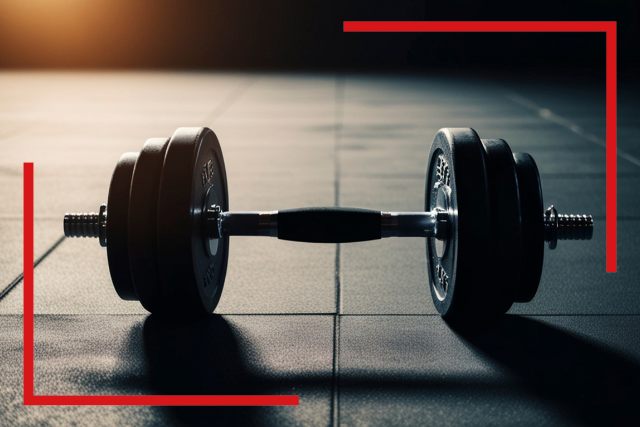
A dumbbell is one of the most versatile pieces of strength training equipment available. Simple in design but powerful in results, it's a short bar with weight on either end, designed to be held in one hand. Most exercises use two, but many movements only require one. And when it comes to home strength training, dumbbells are often the smartest place to start.
In This Article
Why Dumbbells Are So Effective
Unlike machines that guide your movement along a fixed path, dumbbells require your body to stabilise itself throughout every exercise. This means each arm works independently, muscle imbalances are identified and reduced over time, and core stability improves alongside balance and coordination, all developing naturally through regular use.
Did You Know?
Studies comparing dumbbell and barbell training consistently show that free weights like dumbbells activate more stabilising muscle fibres than machine-based exercises at the same load. This makes them more efficient at building functional, real-world strength alongside the primary muscles being trained.
They're compact, adaptable and suitable for beginners right through to experienced lifters. This versatility also means they're easy to store and don't take up much space, making them an ideal choice for home workouts where every square foot matters. Our guide on how to use dumbbells for full-body training at home covers exactly what's possible with a single set.
Types of Dumbbells
If you're looking to buy dumbbells for home use, you'll typically come across two main types. Understanding the difference helps you choose the option that best fits your space, your goals and the way you train.
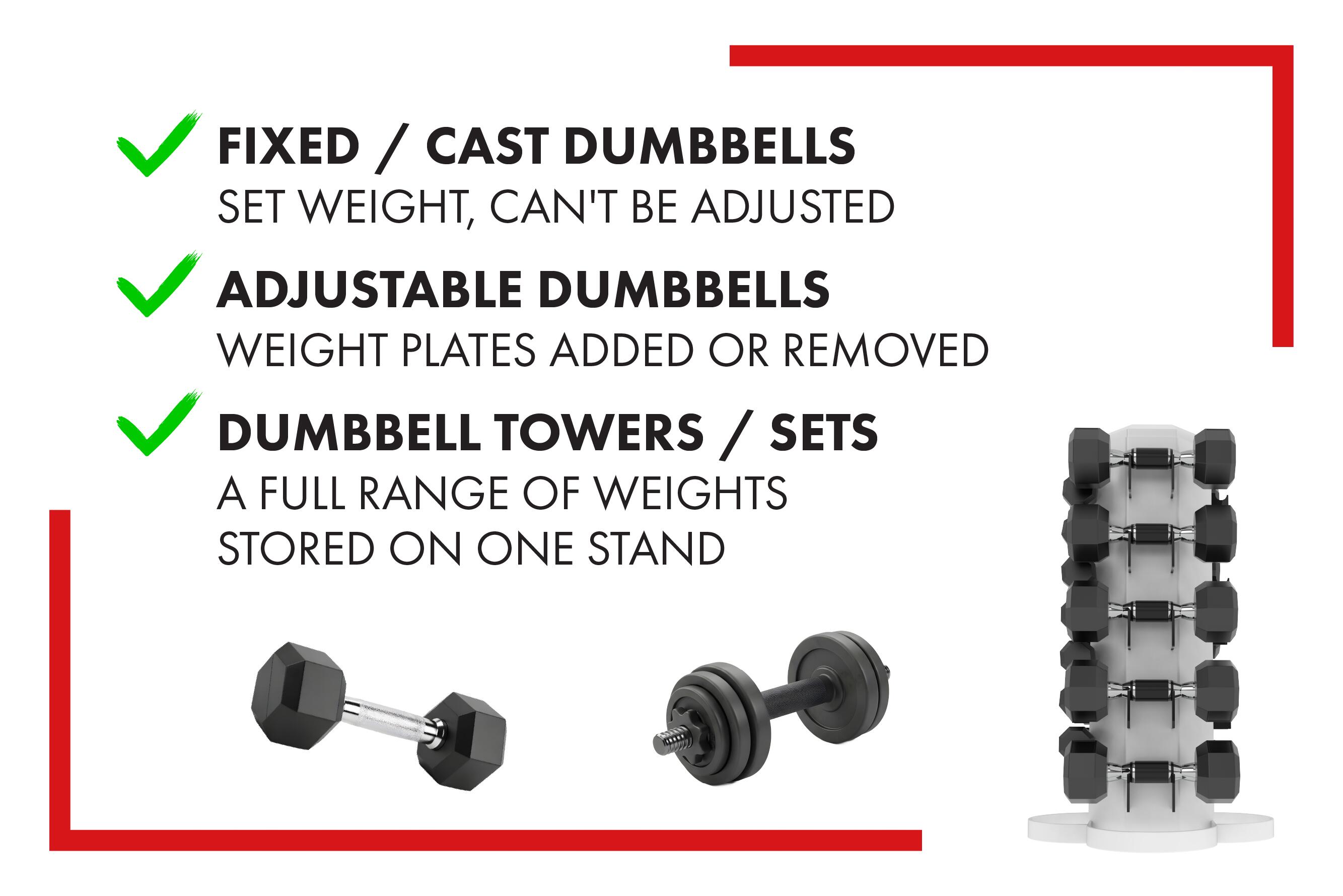
Fixed Weight Dumbbells
These come in one set weight and can't be adjusted. Body Sculpture stocks them in a range from 1.5kg to 25kg. They're popular with people at a variety of fitness levels because they're simple, reliable and easy to grab mid-workout without any setup. This makes them particularly well suited to quick sessions, circuit training and anyone who prefers not to stop between exercises to change resistance.
Fixed weight dumbbells are also available as a complete dumbbell tower set, where the weights come neatly organised on a compact storage rack ready to use straight away. This makes them an ideal solution for anyone who isn't sure what weight they're comfortable with yet, or who wants to use a range of weights across a full-body workout session.
Adjustable Dumbbells
These allow you to add or remove weight plates, meaning one set can replace multiple pairs of fixed weights. They're perfect for those with limited home workout space and work particularly well for progressive strength training, smaller home gyms and longer-term fitness goals, because you can gradually increase resistance as you get stronger without needing to buy new weights each time.
Body Sculpture
"Used consistently, a pair of dumbbells can completely transform your training routine and build real, lasting strength from the comfort of home."
Best Dumbbell Exercises for a Full-Body Workout
One of the biggest benefits of dumbbells is that you can train your entire body with just a pair. With just 20 to 30 minutes, you can complete an effective full-body dumbbell workout at home that covers upper body strength, lower body power and core stability.
| Workout Type | Best Exercises | Key Benefit |
|---|---|---|
| Upper Body | Bicep curls, shoulder presses, chest presses, bent-over rows | Builds arm, shoulder and back strength while improving posture |
| Lower Body | Goblet squats, reverse lunges, Romanian deadlifts | Develops leg and glute strength and improves stability and balance |
| Core and Stability | Weighted Russian twists, farmer's carries, renegade rows | Strengthens the core and improves total body coordination |
▶ Pro Tip
Structure a simple full-body session by picking one exercise from each row of the table above. Do three sets of 10 to 12 reps for each, with 60 seconds rest between sets. That's a complete, balanced workout in under 30 minutes, suitable for any fitness level.
Why Dumbbells Are Ideal for Home Workouts
Home fitness continues to grow because people want flexibility, and dumbbells deliver it across the board. They offer space-saving storage, an affordable entry point into strength training, options suitable for all fitness levels and quick, efficient workouts that fit around your day without needing a full gym setup.
Pairing dumbbells with a weight bench dramatically expands what you can do, adding chest presses, incline work and supported rows to your repertoire without taking up much additional space. A set of resistance bands alongside your dumbbells adds even more variety and is particularly useful for warm-up activation work before lifting. Our post on 5 home gym essentials for beginners puts dumbbells in context alongside the other key pieces that make a home gym genuinely complete.
How to Choose the Right Dumbbells for You
The right choice depends on where you are in your fitness journey and how you plan to train. If you're just starting out and want something simple to pick up and use, a pair of fixed-weight dumbbells in the 3kg to 6kg range for upper body work and 6kg to 10kg for lower body exercises is a sensible starting point for most people. A dumbbell tower set gives you immediate access to a full range of weights without needing to make multiple purchases over time.
If you prefer to train with progressive overload and want your weights to grow with you as you get stronger, an adjustable set is the more space-efficient and cost-effective long-term choice. Whatever you choose, starting lighter than you think you need to and focusing on technique first is always the approach that delivers the best results. Our guide to the top mistakes to avoid when buying home gym equipment covers this and the other key things to get right before you spend.
Dumbbells are one of the most straightforward and effective tools you can add to a home workout. Whether you're just starting your fitness journey or building on an established routine, having the right dumbbells at home and using them consistently can make a genuine and lasting difference to your strength, body composition and overall wellbeing.
Key Takeaways
- Dumbbells are a short, handheld weight used in one or both hands for a huge range of strength exercises
- They engage stabilising muscles more than machines, building functional strength alongside primary muscle groups
- Fixed weight dumbbells are ideal for simplicity and speed; adjustable sets are better for progressive training in limited space
- A pair of dumbbells is enough to train the upper body, lower body and core in a single 20 to 30 minute session
- Starting lighter than feels necessary and focusing on form first always produces better long-term results
Frequently Asked Questions
What weight dumbbells should a beginner start with?
For most beginners, 3 to 6kg is a sensible starting point for upper body exercises such as curls and presses, and 6 to 10kg for lower body movements like goblet squats and Romanian deadlifts. The right weight allows you to complete 10 to 12 repetitions with good form where the last two or three reps feel genuinely challenging but not impossible. Start lighter than you think you need to and build from there.
Are fixed or adjustable dumbbells better for home use?
It depends on your space and how you train. Fixed dumbbells are faster to use during a workout and don't require setup between exercises, making them ideal for circuit training and quick sessions. Adjustable sets take up significantly less space and grow with you as your strength develops, making them a better long-term investment for anyone focused on progressive training in a limited area.
How many pairs of dumbbells do I need for a full-body workout?
Two to three pairs covering light, medium and heavier weights is enough for most people to train the whole body effectively. A lighter pair for isolation exercises, a medium pair for most upper body compound movements and a heavier pair for lower body exercises covers the majority of what's needed. A dumbbell tower set is the most practical way to access this range without clutter.
Can I build muscle with just dumbbells?
Yes, absolutely. Dumbbells provide the progressive resistance that muscle growth requires and cover all the major movement patterns needed for a complete strength programme. Our guide on how to use dumbbells for full-body training at home shows exactly how to structure sessions that build real muscle over time. If you're deciding between free weights and bands, our companion piece on whether you can build muscle with just resistance bands walks through the equivalent approach for anyone without dumbbells at home yet.
What's the difference between a dumbbell and a kettlebell?
Both are handheld free weights but they're shaped differently and used for different types of exercise. Dumbbells have a symmetrical bar with equal weight at each end and suit controlled, joint-specific movements. Kettlebells have an offset centre of gravity from the handle and are designed for swinging, ballistic and dynamic movements. Most people benefit from having both. Our guide on what kettlebell training is covers what each tool does best.
Found this helpful? Share it with someone who is just starting out with home strength training and isn't sure where to begin.
Find Your Perfect Dumbbells
Browse the full Body Sculpture dumbbell range including fixed-weight sets, towers and adjustable options to suit all fitness levels and home gym setups. With over 50 years of expertise, we are here to help you find the right fit.
Shop Dumbbells50+ Years Expertise Designing equipment since 1975 | ★★★★★ Trustpilot Rated Excellent by our customers | FREE UK Delivery On all qualifying orders | 24/7 Expert Advice Our team is happy to help |